{{ n.date }}
{{ n.tag }}
{{ n.title }}
{{ para }}
The work of Krista Kim — luminous, meditative gradients that transform technology into instruments of stillness, wellbeing and shared consciousness.
Screens — so often sources of anxiety — become serene, restorative environments.
Krista Kim is a pioneering digital artist and founder of the Techism movement, working at the meeting point of light, colour and consciousness. Her immersive installations — held in the permanent collections of LACMA and the Louis Vuitton Foundation — treat the screen not as a source of noise but as an instrument of stillness, transforming technology into a living experience of wellbeing.
For the “With Love, Seoul” exhibition, HeartSpace captured each guest’s heartbeat as an ever-changing digital tapestry — a living portrait of shared human presence.
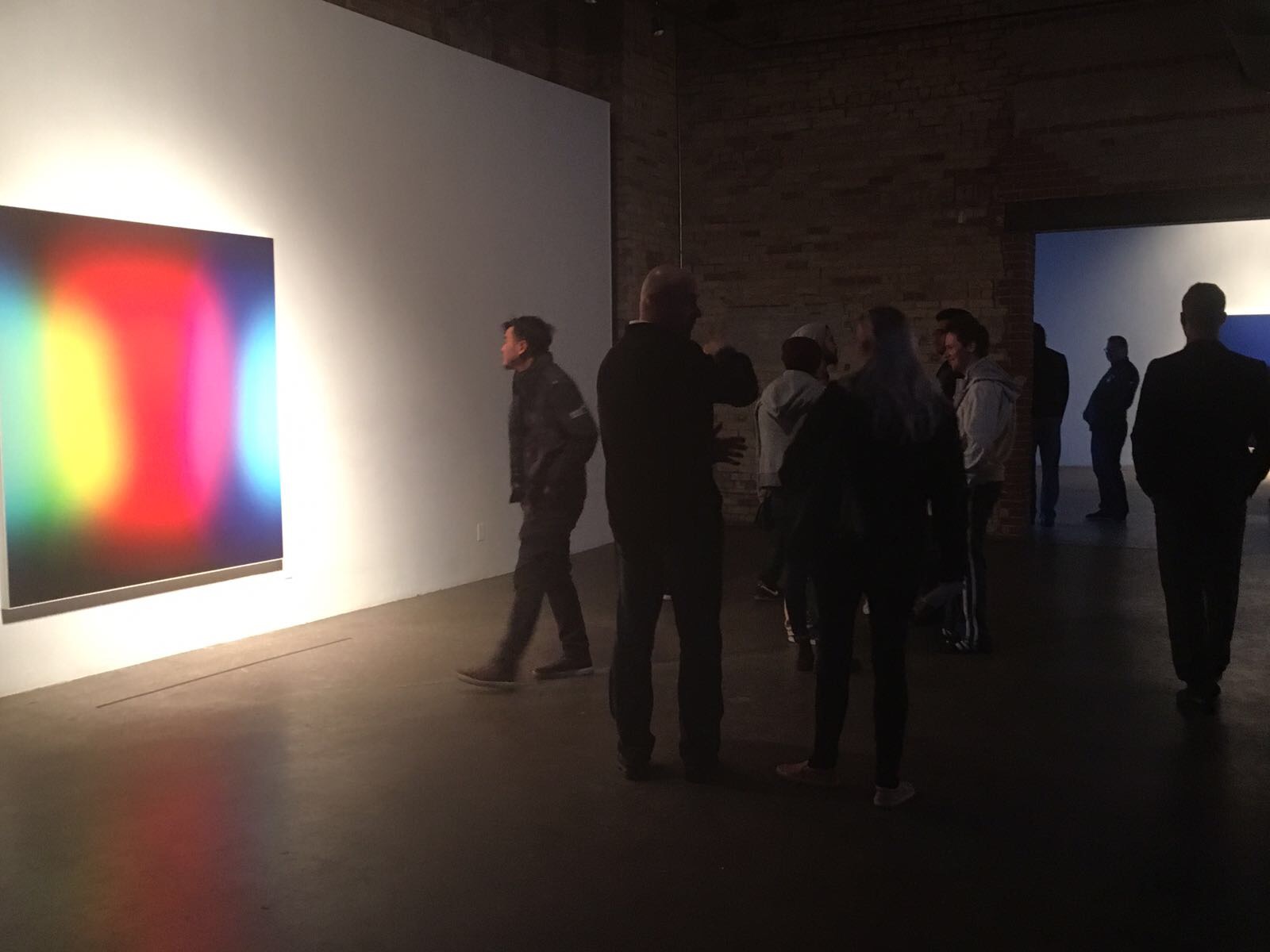
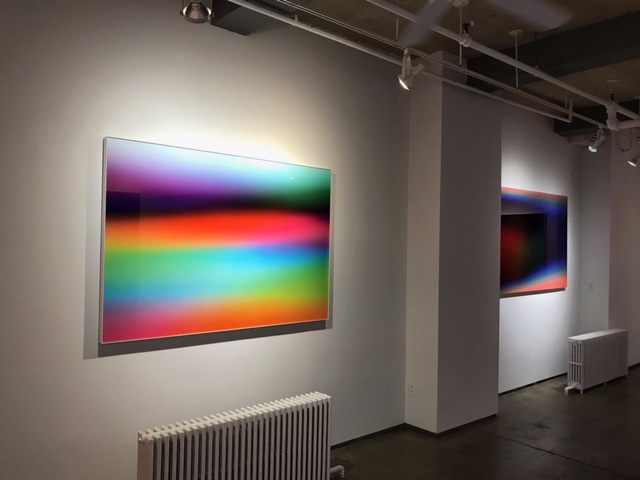
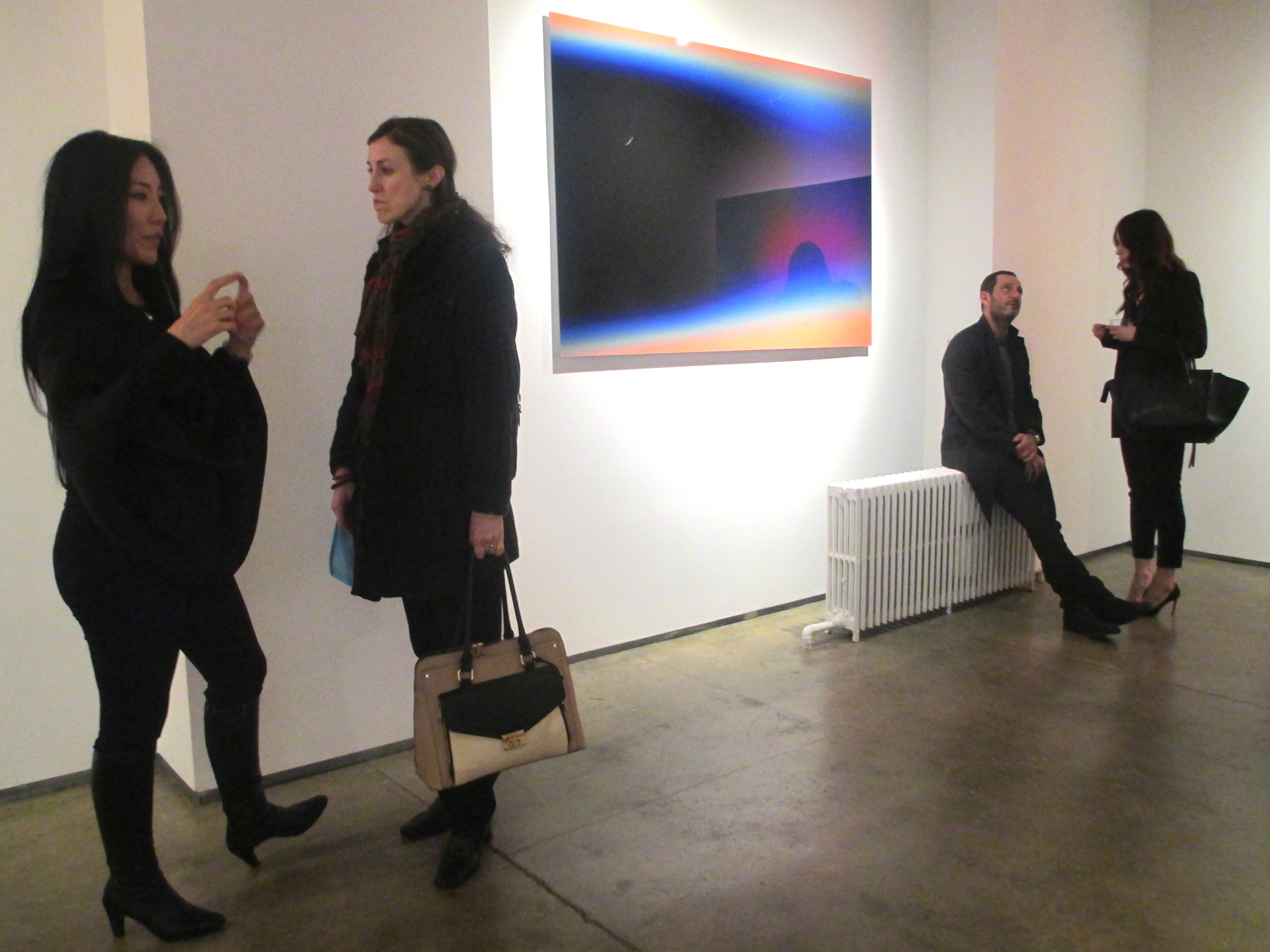
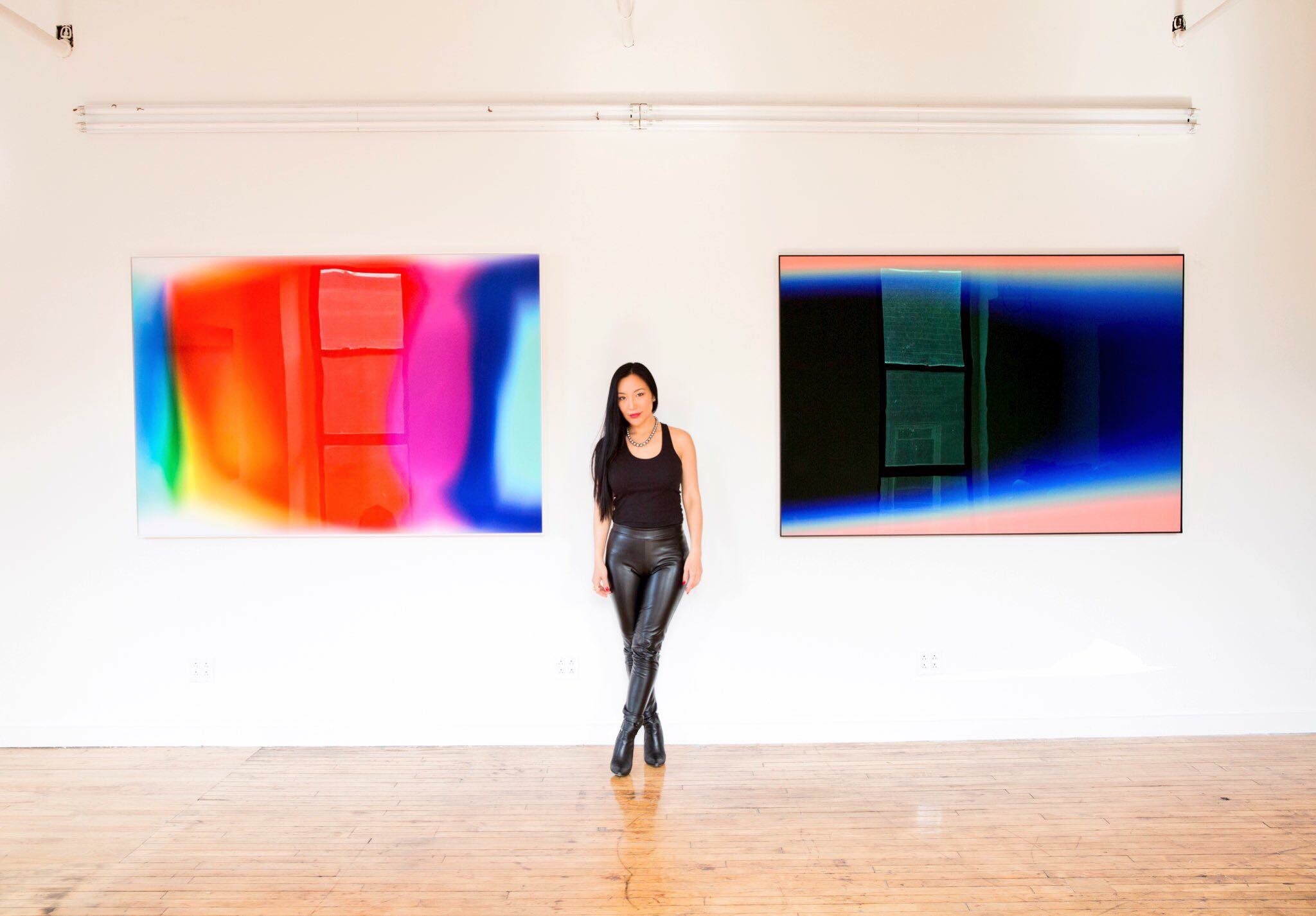
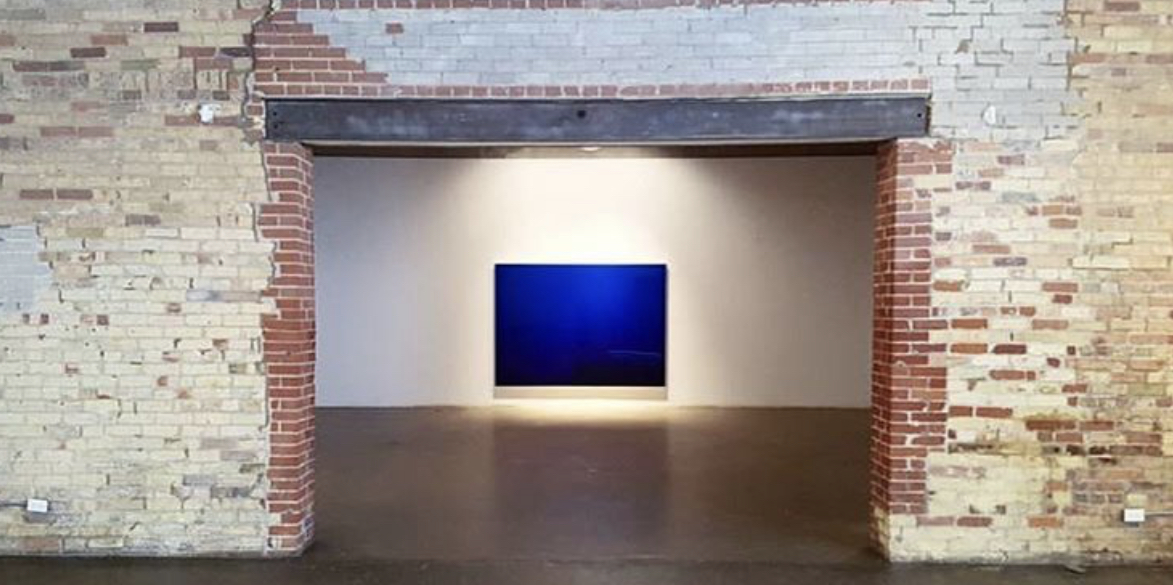
The journey of Krista Kim's practice from painting to light — colour fields in slow, luminous transition, composed as instruments of stillness.

Technology and art as companions — creating a space of stillness, balance and shared consciousness.
Founded by Krista Kim in 2014, Techism advocates for the human spirit within the digital age — art that restores rather than overstimulates, and technology guided by consciousness and wellbeing.
Read the ManifestoKrista Kim is a pioneering digital artist and founder of the Techism Movement — a cultural philosophy established in 2014 that positions technological innovation as an artistic discipline and advocates for digital humanism: a framework that challenges technology's extractive paradigms and champions human agency in shaping our digital future.
Her practice operates at the intersection of art, technology and consciousness. Through immersive installations utilising light, sound and extended reality, she creates transformative environments that intervene in how digital systems influence human perception. A World Economic Forum Cultural Leader, Kim contributes to global discourse on innovation, culture and the evolving relationship between humanity and technology.
In 2020 Kim created Mars House, a prophetic work that anticipated fundamental shifts in digital value and ownership. When it sold as an NFT in March 2021 for over $500,000, it became a landmark moment in digital asset history, catalysing worldwide conversation around blockchain authentication and digital provenance. Scholars have recognised Mars House as pivotal to digital art discourse, cited in major publications from Yale University Press and Schiffer Publishing.
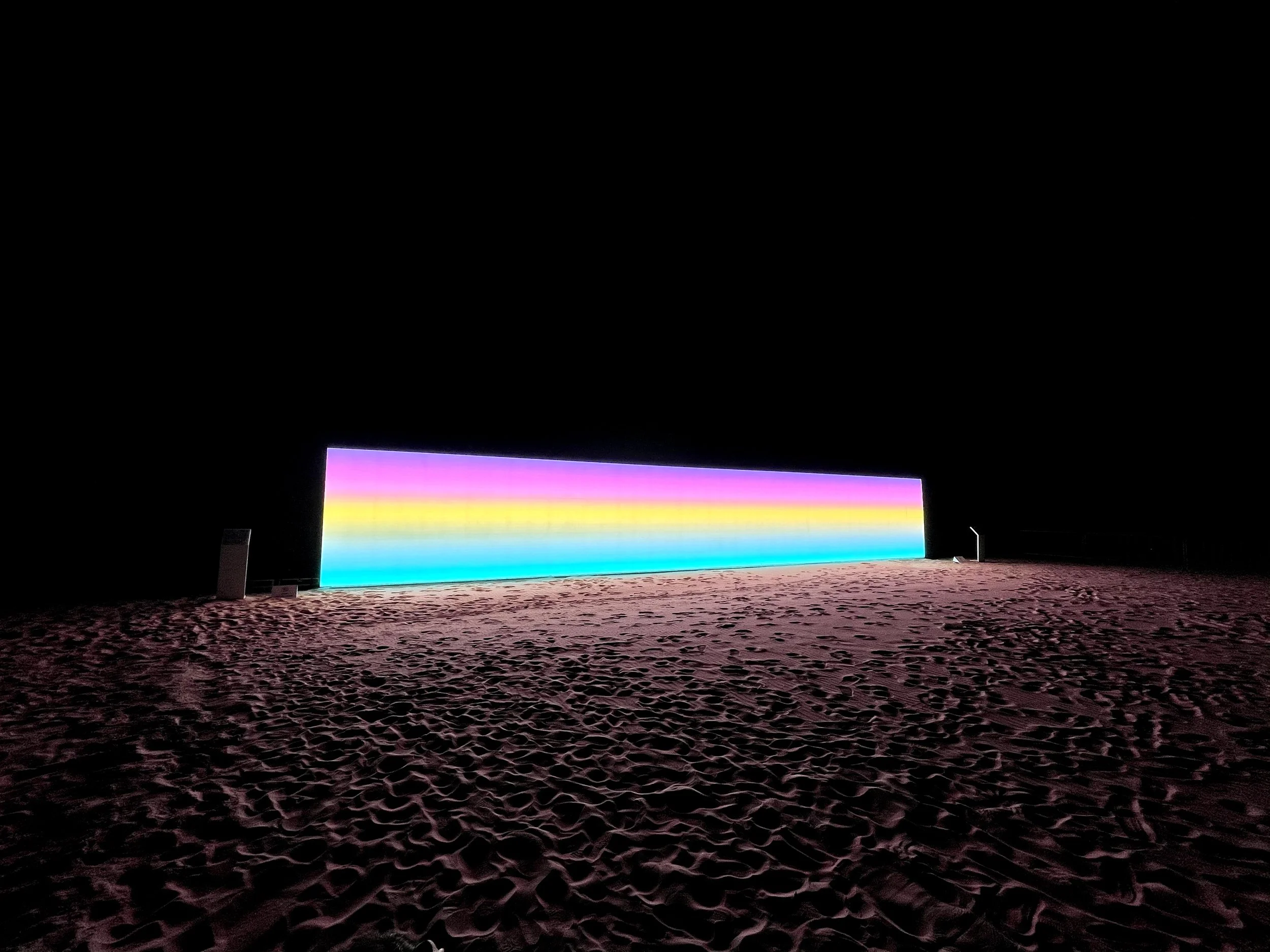
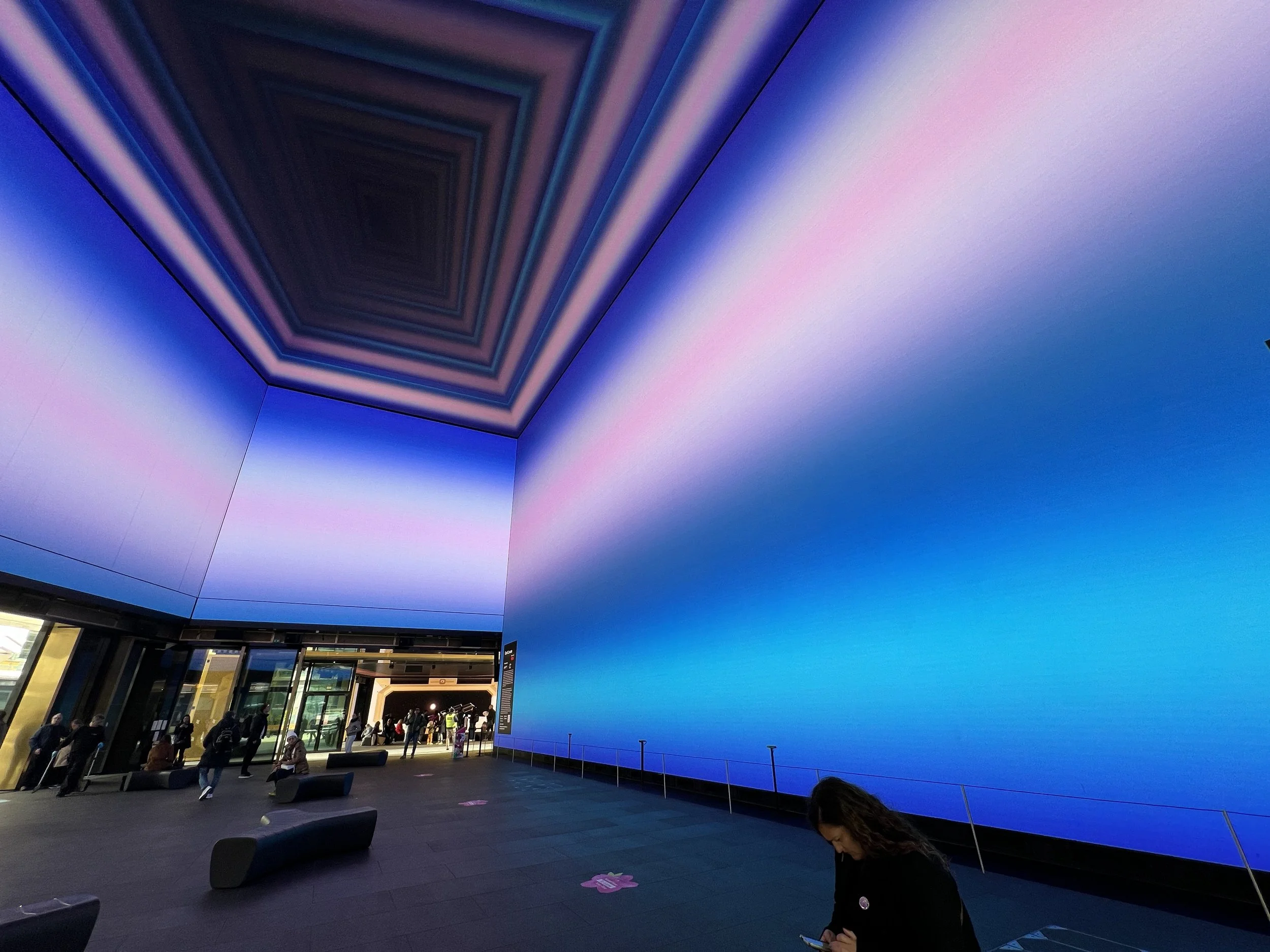
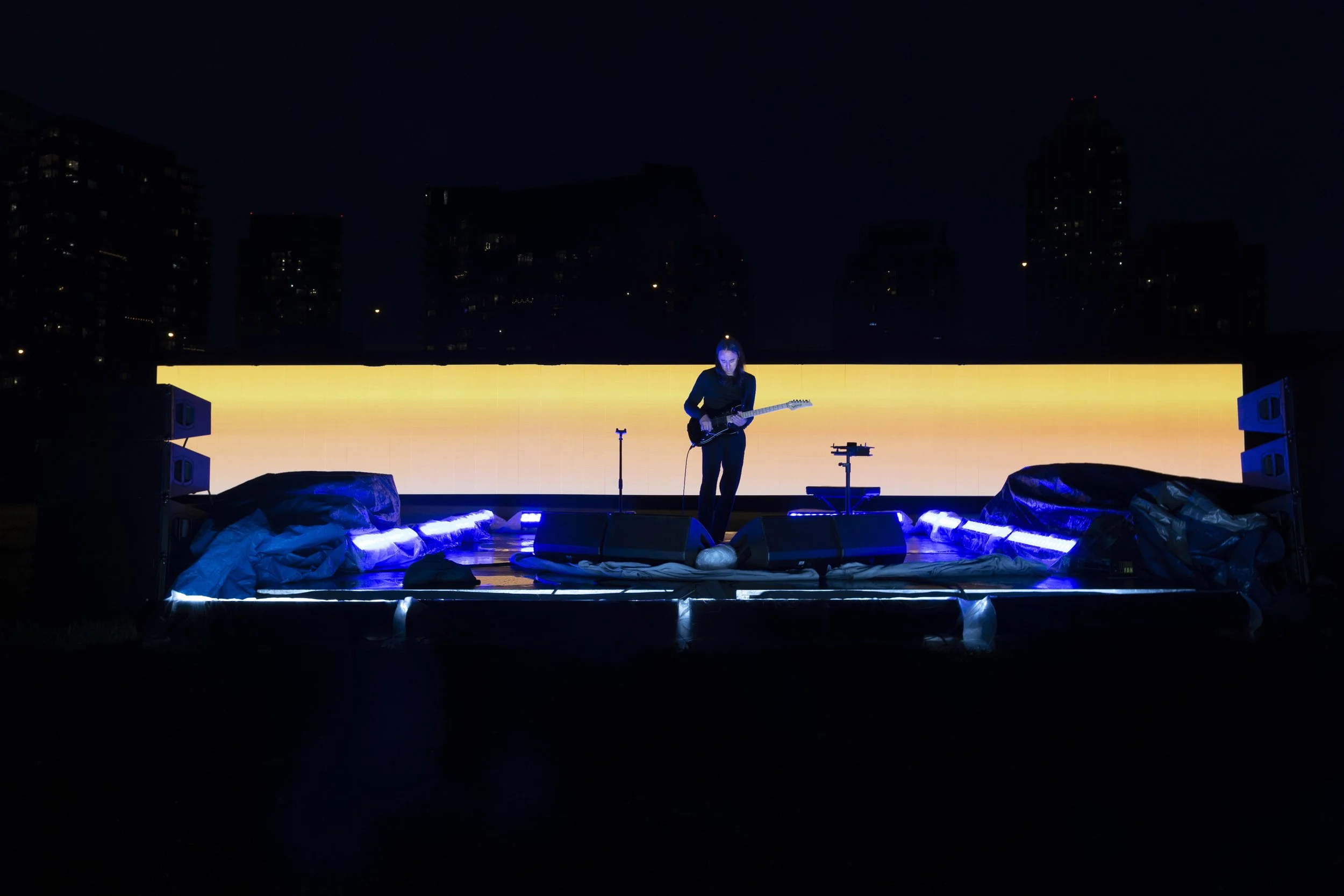
Her Continuum installation reclaimed Times Square throughout February 2022, interrupting commercial saturation with meditative light compositions each midnight. LACMA acquired Continuum: Los Angeles and Mirror of the Mind for its permanent collection. Heart Space, commissioned by Julius Baer for Art Dubai, employs biometric technology to explore human authenticity in the age of AI, and is currently exhibited at MOCO Museum in London and Barcelona.
Kim's works have been featured at leading institutions worldwide, including LACMA, the Hermitage State Museum, Palazzo Strozzi, Sotheby's New York, Times Square, Art Dubai, Singapore Art Week and the World Economic Forum in Davos. Through her practice, she continues to shape global dialogue on art, technology and the future of human experience in increasingly digital environments.
Enquiries{{ para }}
{{ para }}
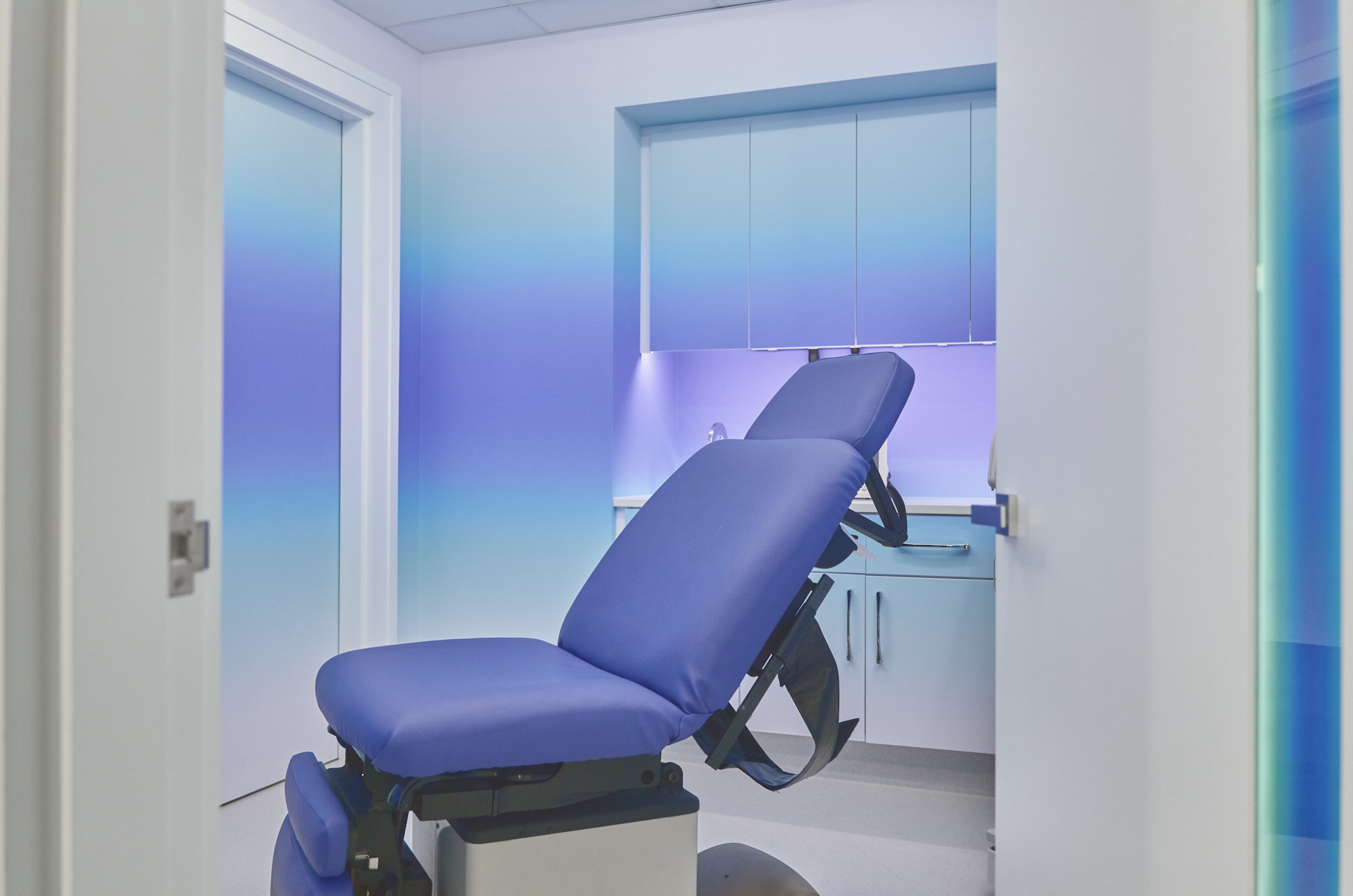
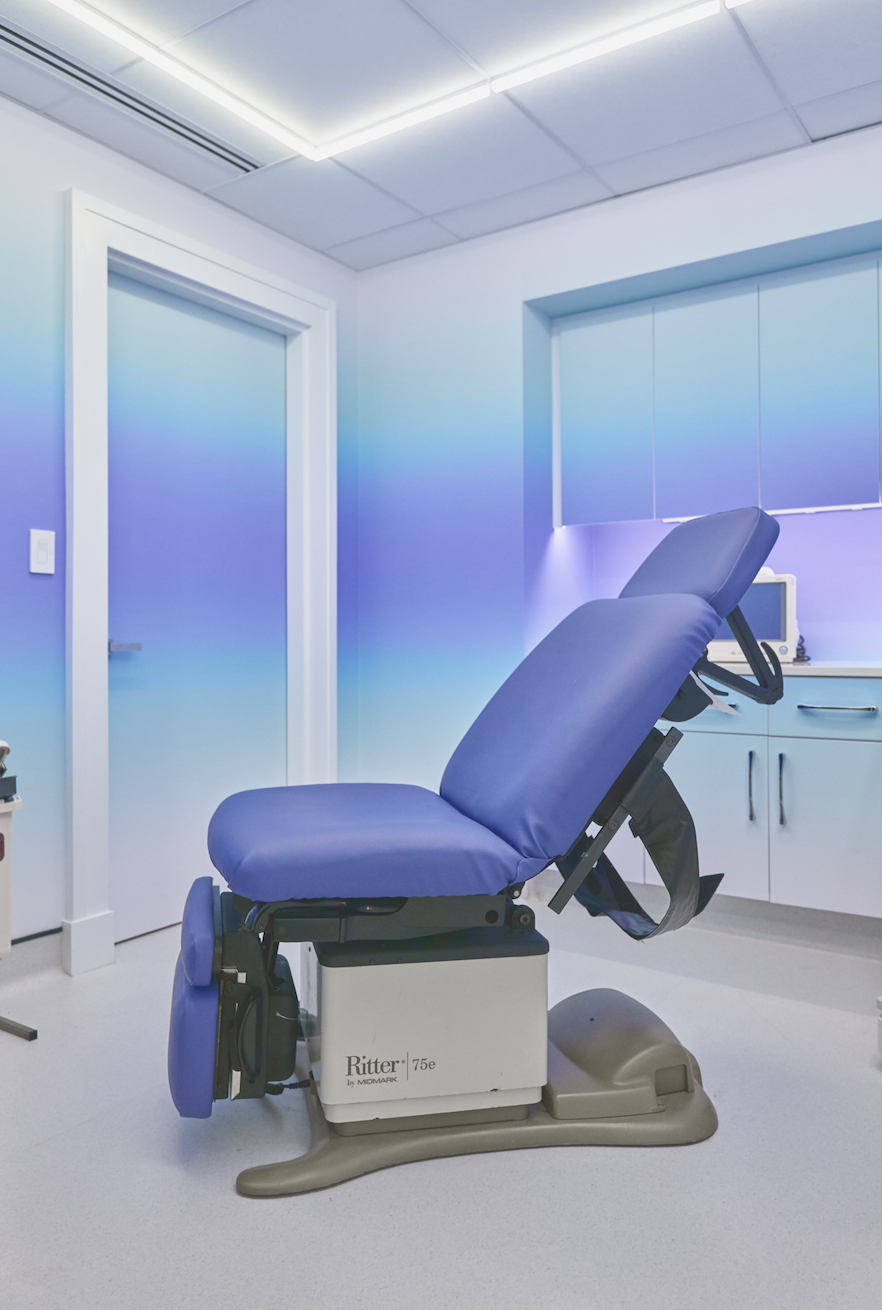
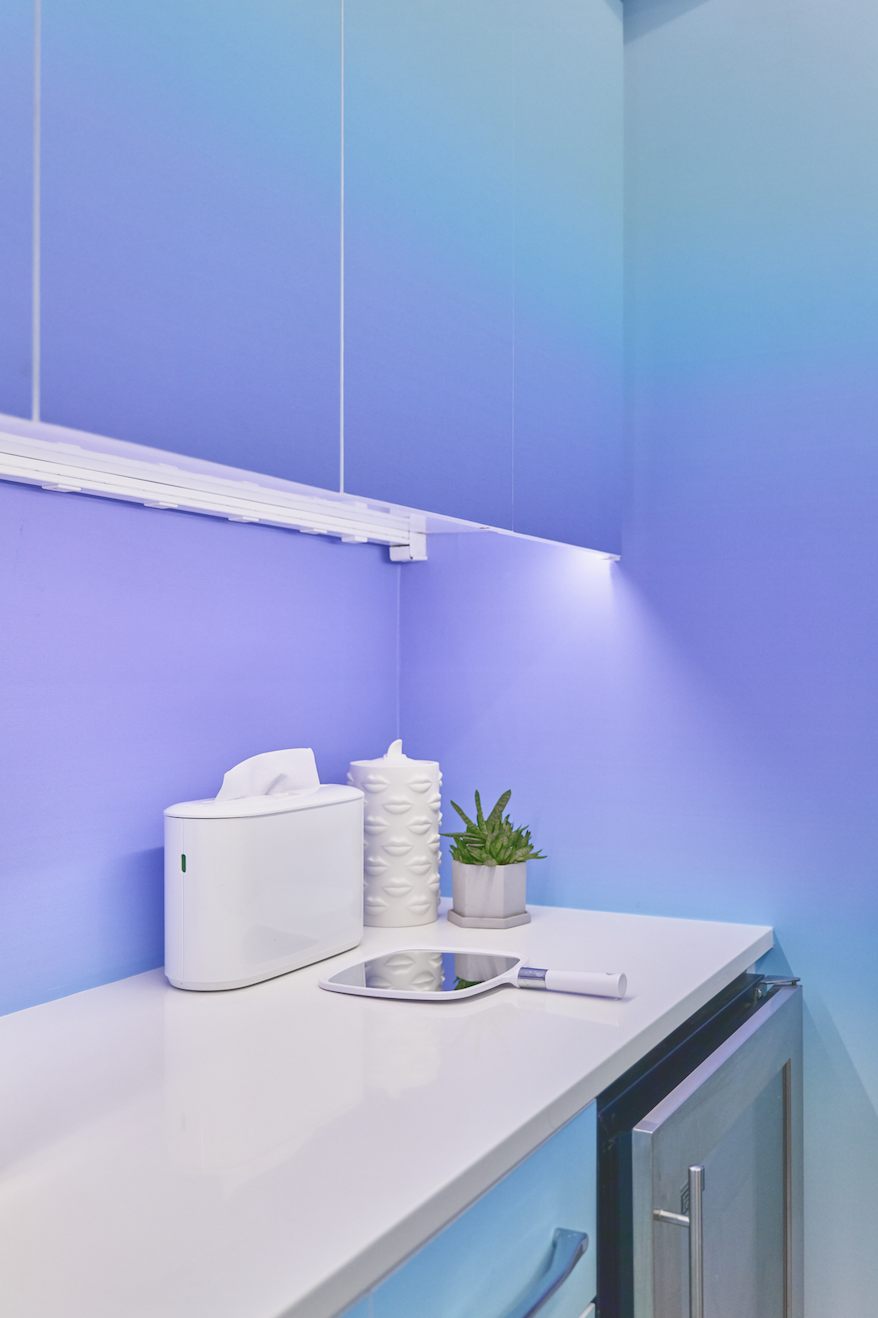
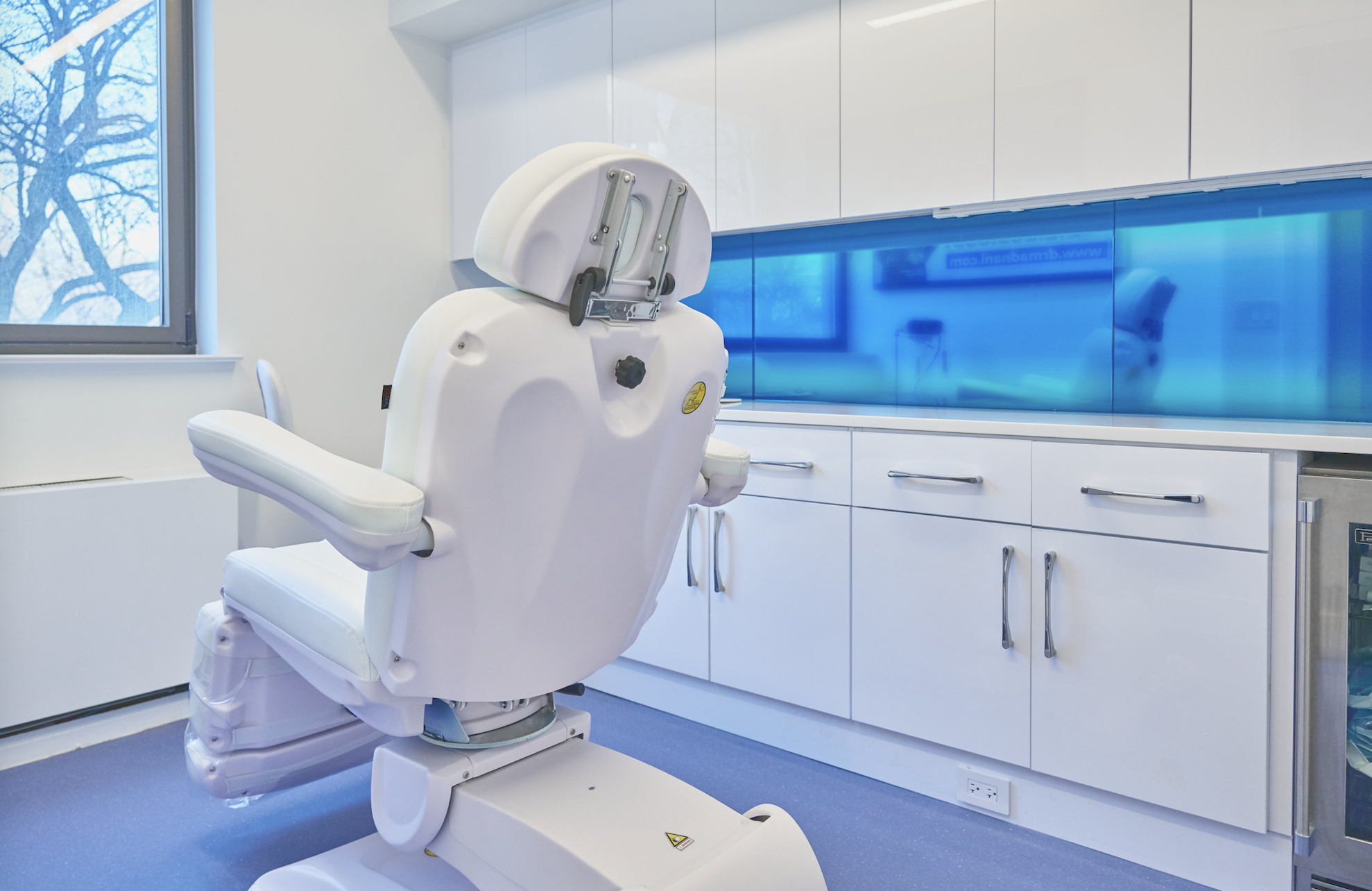
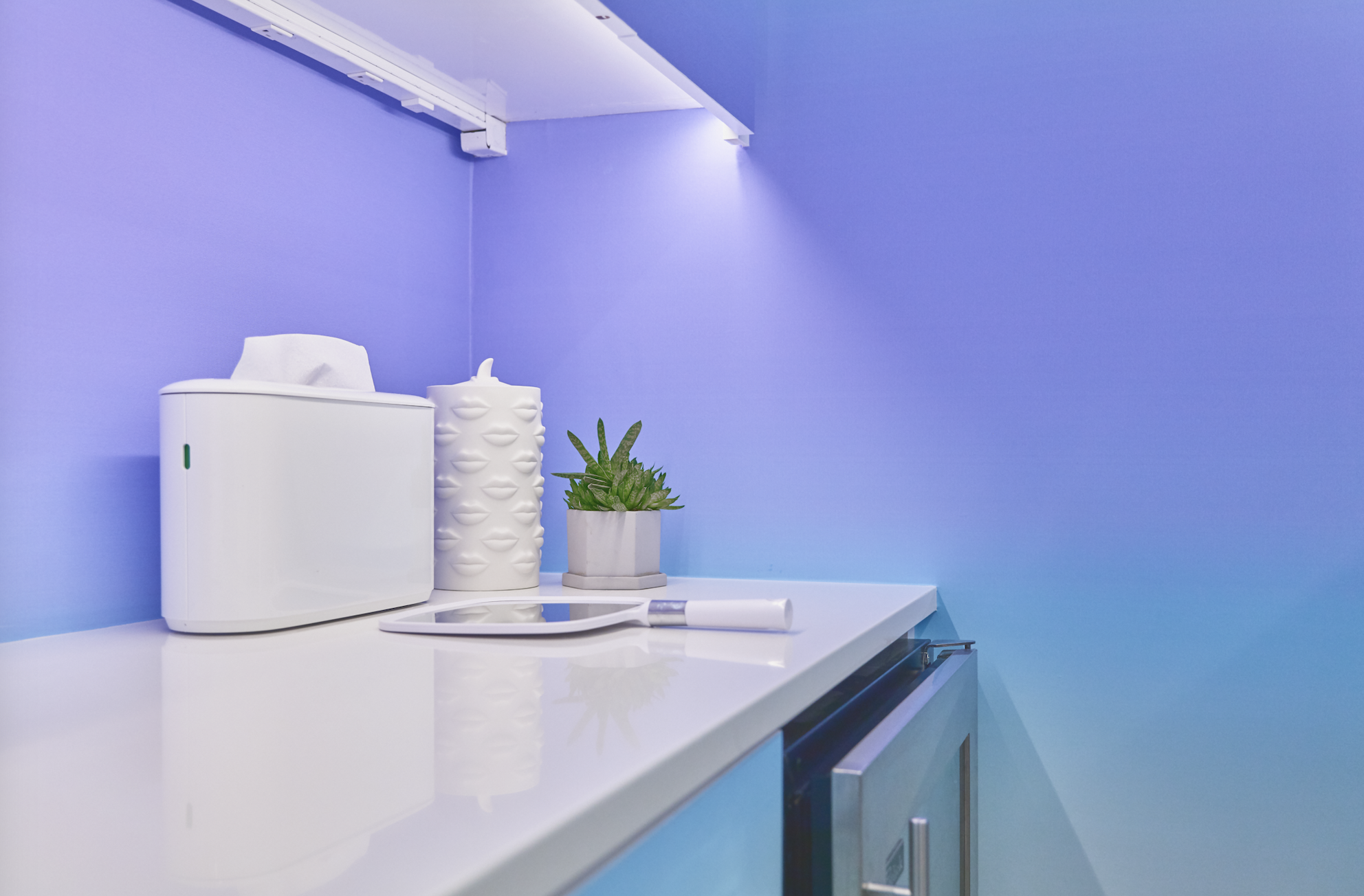
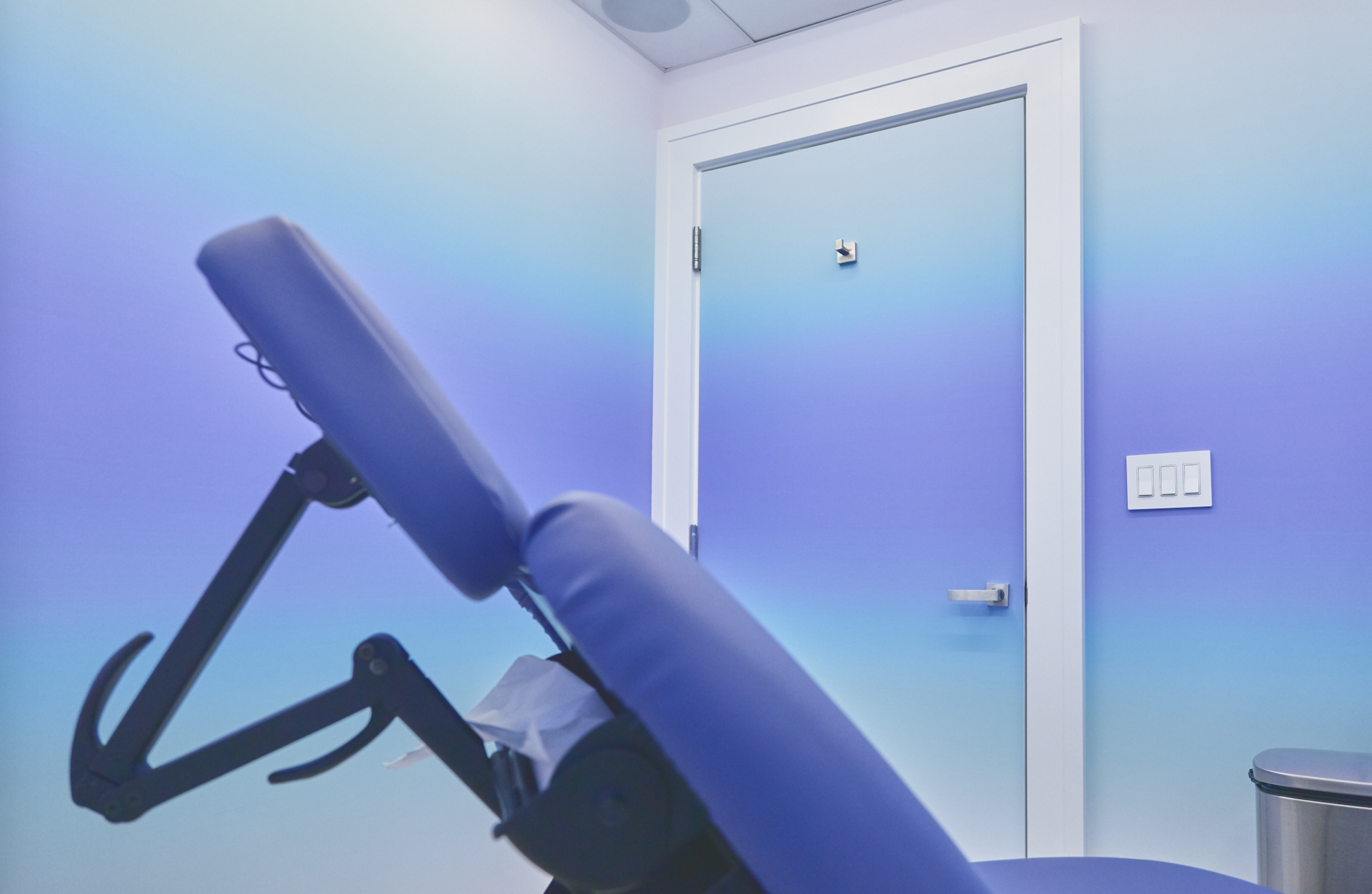
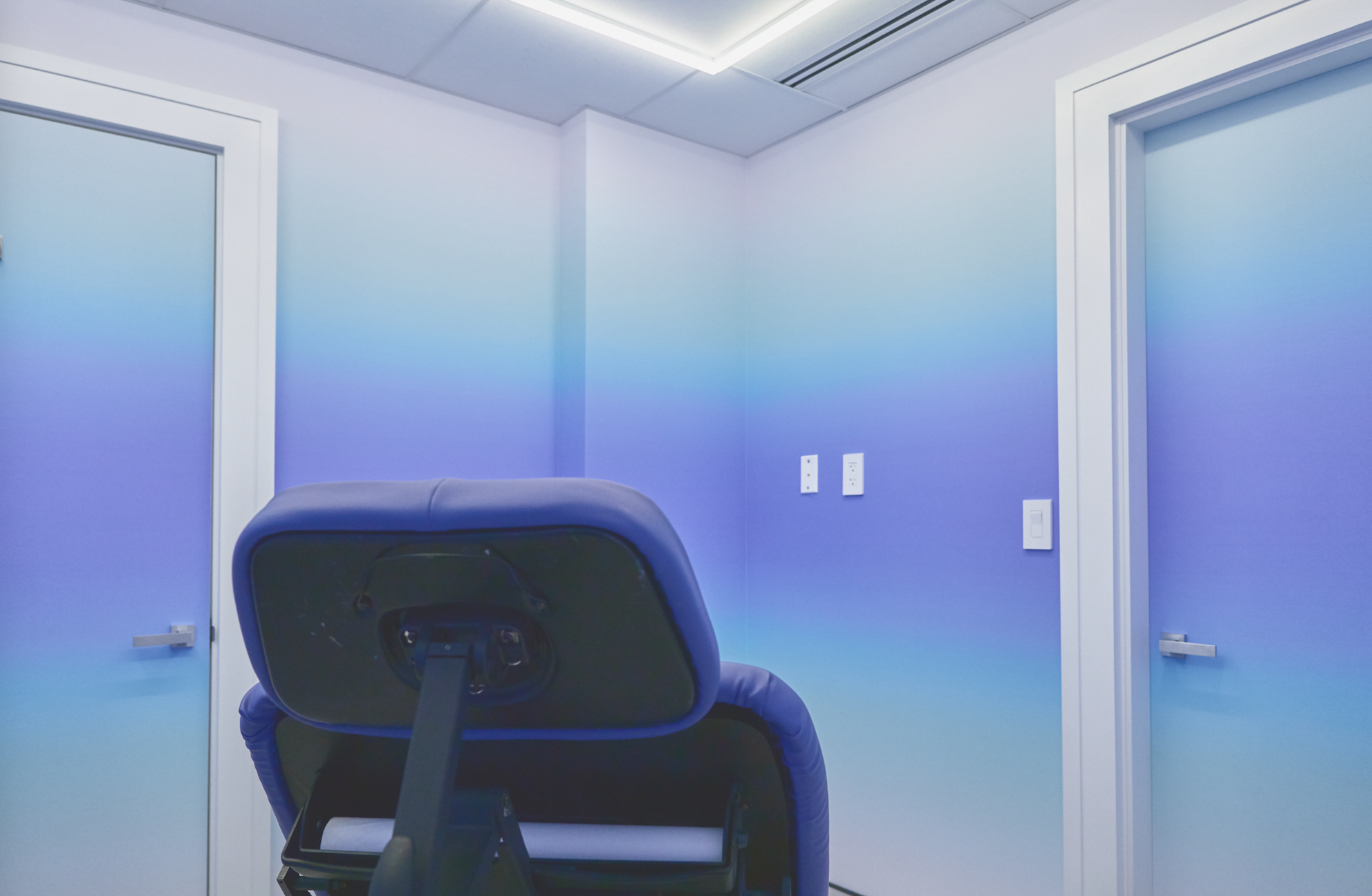
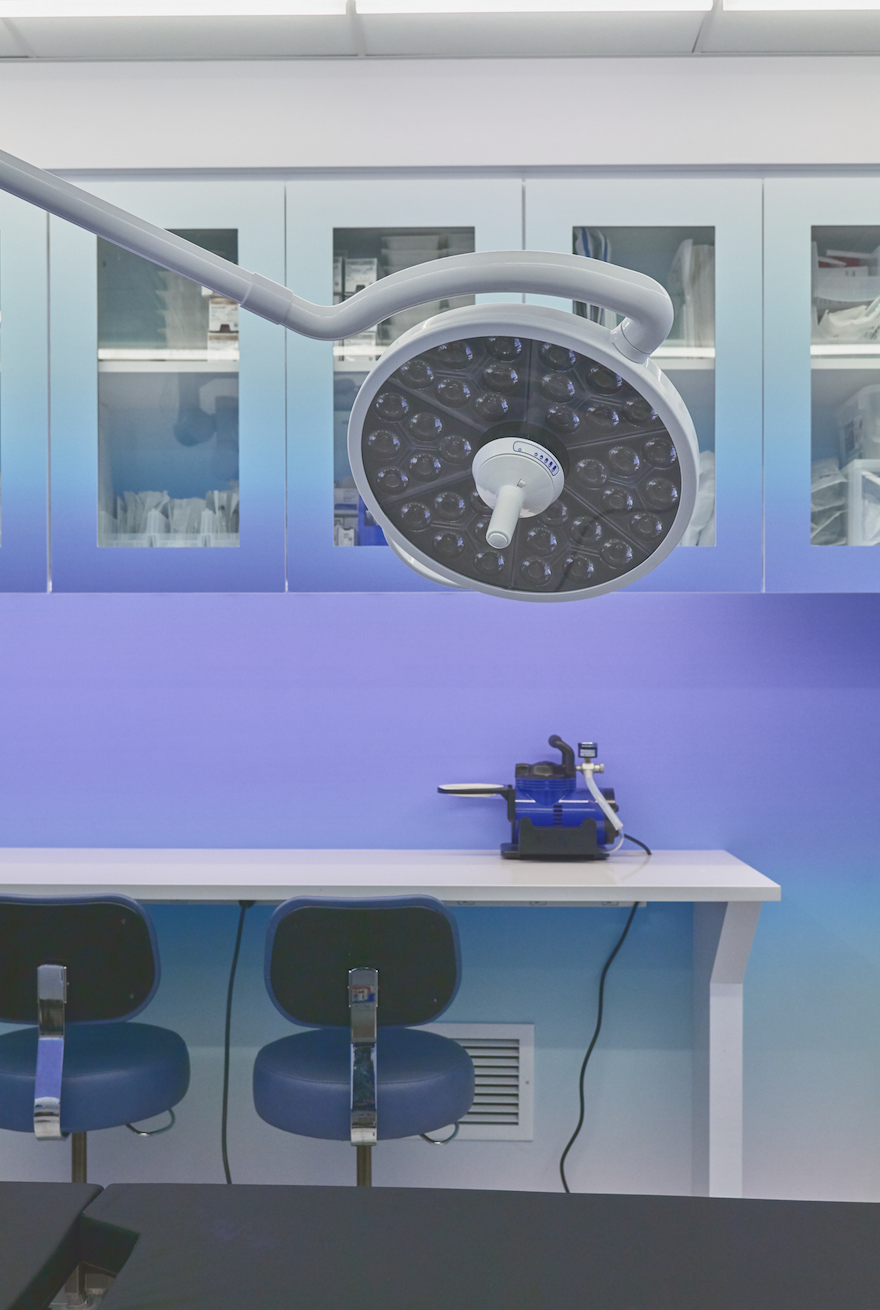
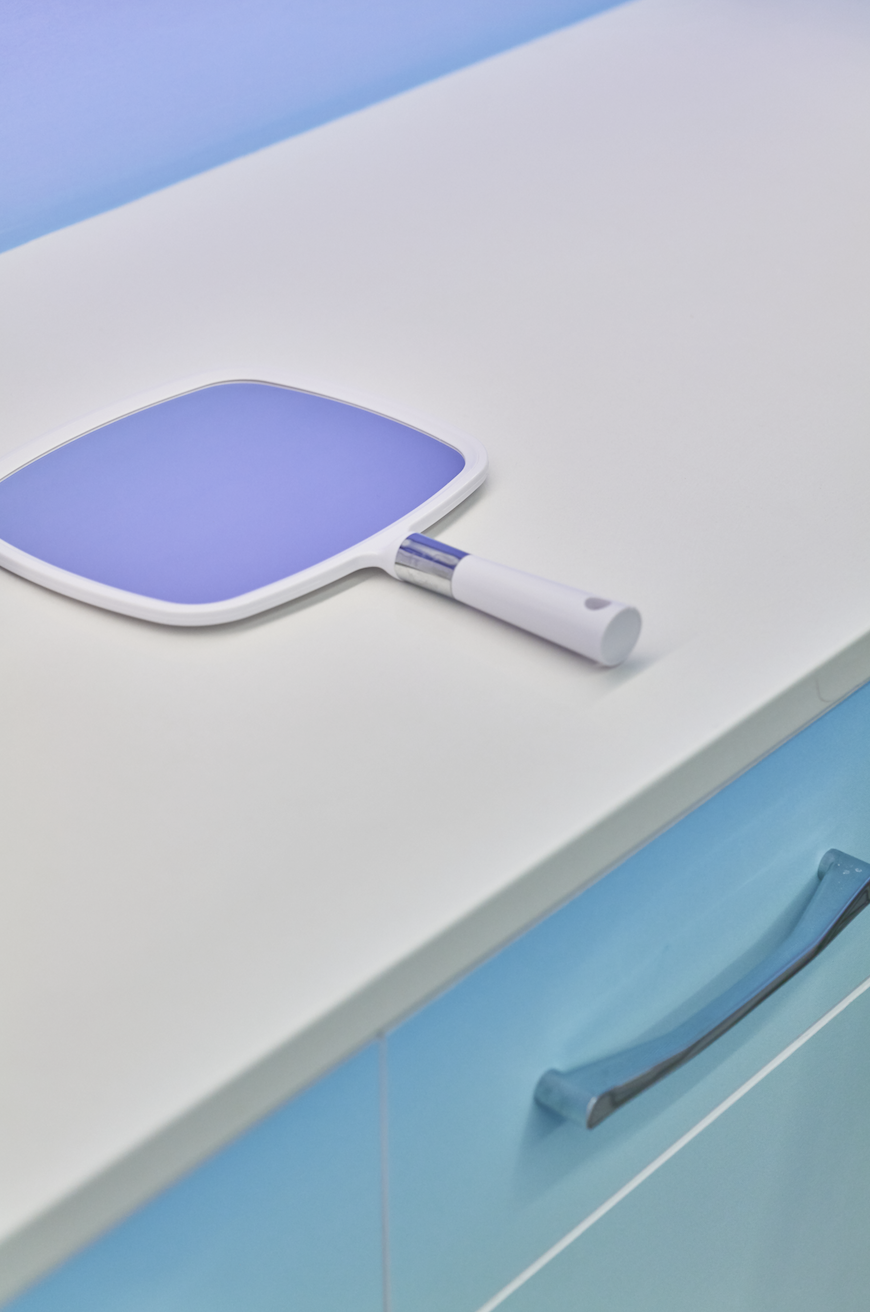
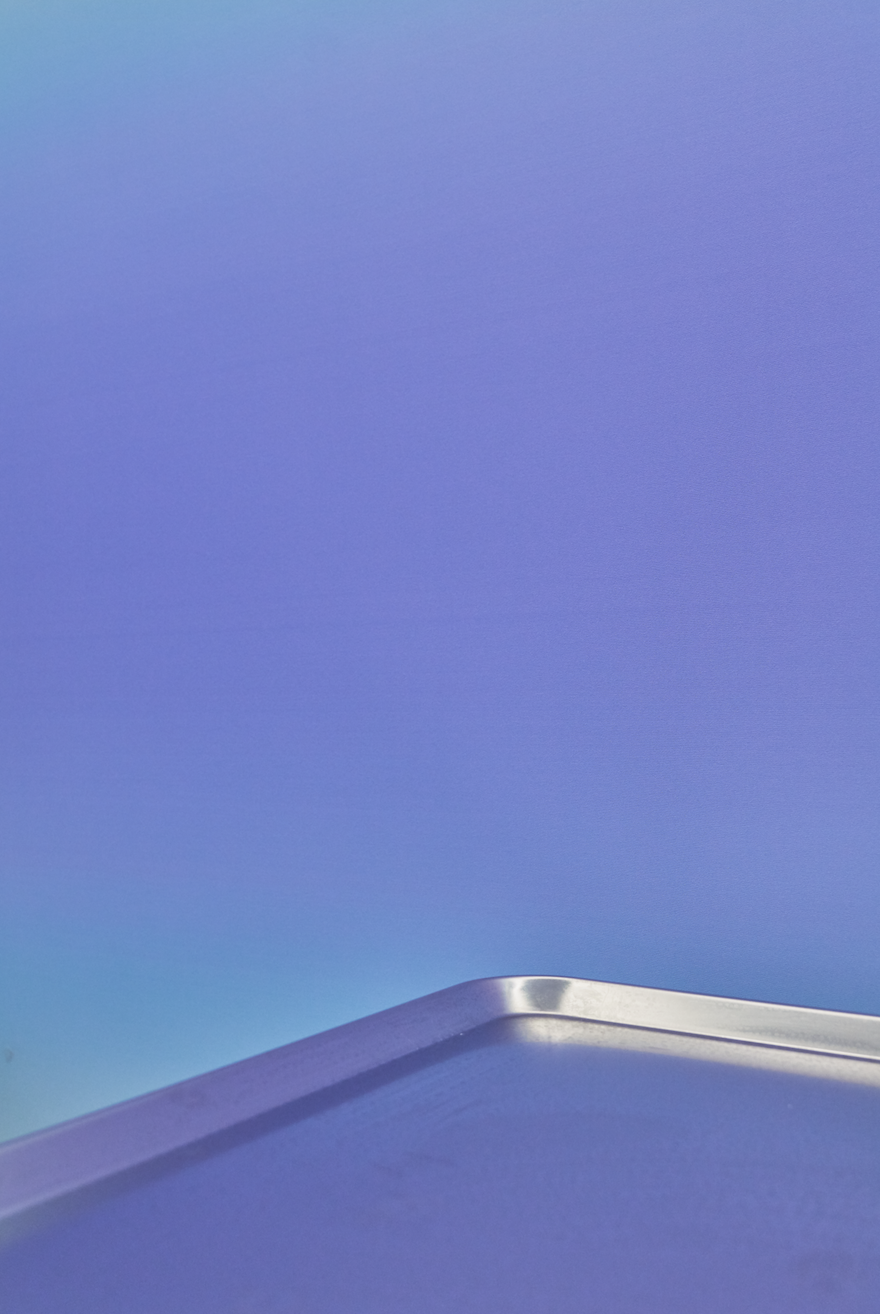
Ceiling-to-floor gradient turns a clinical interior into a continuous field of calm — every surface tuned as an instrument of wellbeing.
Krista Kim is a Canadian-Korean contemporary artist. She is currently writing Proof of Humanity, a book on human sovereignty in the age of AI.
{{ para }}
{{ c.quote }}
{{ para }}
Techism is a movement that reconciles technological innovation with the creation of art. Techism understands innovation — be it technological or philosophical — as a medium in and of itself. It does not put technology before art, but rather sees art and technology as companions meeting the next wave of human expression: digital humanism. We are the masters of technology, and creating art is the expression of digital humanism.
What is digital human existence, and what is the beauty in it?
Many traditional practices of artisanship have remained, and they will continue to do so. Techism is not a movement that stands in opposition to older practices, nor does it assert that the old will be swept away with the new. Artists can decide when and which practices to adopt and discard with each phase of creation.
In the age of digital disruption, technology will continue to transform and revolutionise industries across services, manufacturing, healthcare, media and education — and it will continue to revolutionise creative platforms. We are in the midst of creating a new digital civilisation, and artists must contribute to this new culture in order to preserve our humanity. We cannot leave the role of leading future culture to technocrats, engineers and corporations. It is in our collective interest to include artists and people of diverse interests, in order to create balance, harmony and humanism. Digital disruption is causing fear and unrest, and without a broader dialogue that is inclusive and expresses our true emotions and concerns, there will be wider conflict and misdirected blame. Art is a force of nature that brings us together, and it is necessary today, more than ever.
Art is no longer limited to a frame on a wall; it is becoming ever more an interactive practice. Collaboration has always enabled art's creation. Collaboration materialises consciousness. Art is consciousness. Techism is an appeal and a return to that consciousness — the consciousness of art as shared, as thing, as idea and as experience.
Software allows the artist to become multifaceted and collaborative. It is about expressing yourself, finding what fits, and collaborating with engineers and intelligent software — because you can. Art is experiential, the phenomenal. We, the viewer, participate and discern for ourselves what we behold.
Techism is the movement of our time — where we must acknowledge digital disruption and accept the immense task of creating new culture that expresses our humanity in the digital age.
"The new digital Rothko."
{{ cite.reference }}
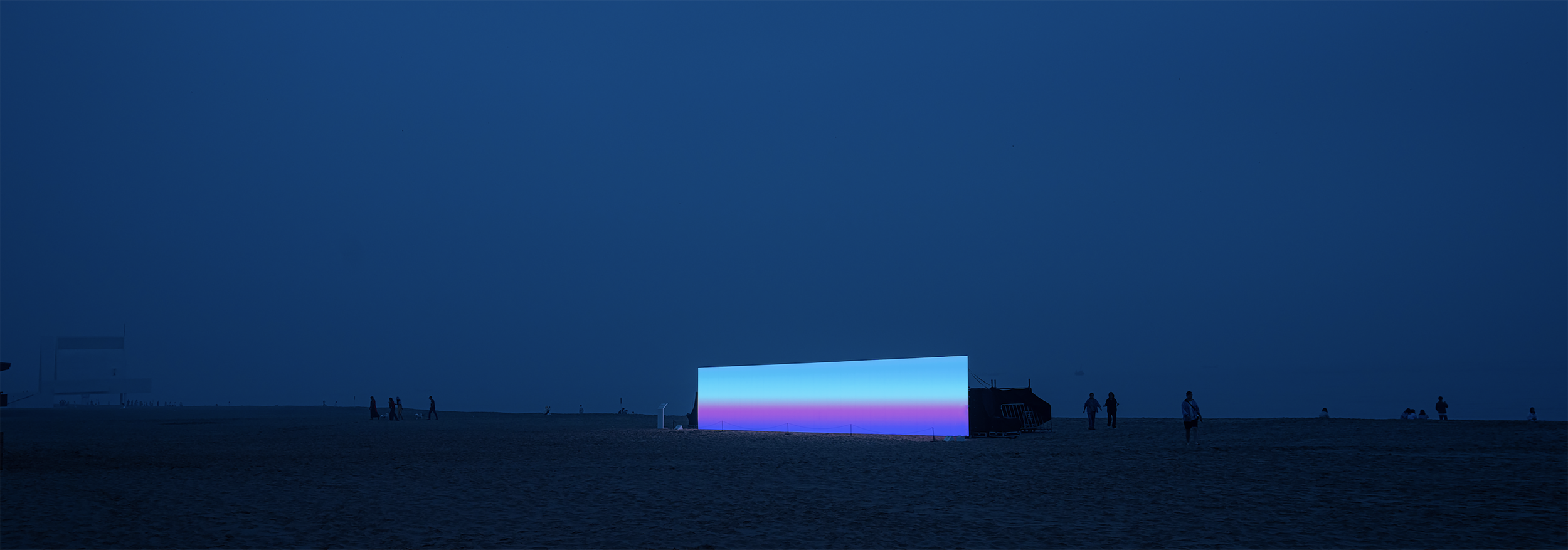
Before there was Continuum — before the world tour, before Times Square, before LACMA — there were paintings. Digital paintings glowing on a screen in a home studio in Singapore, made for one artist's own healing.
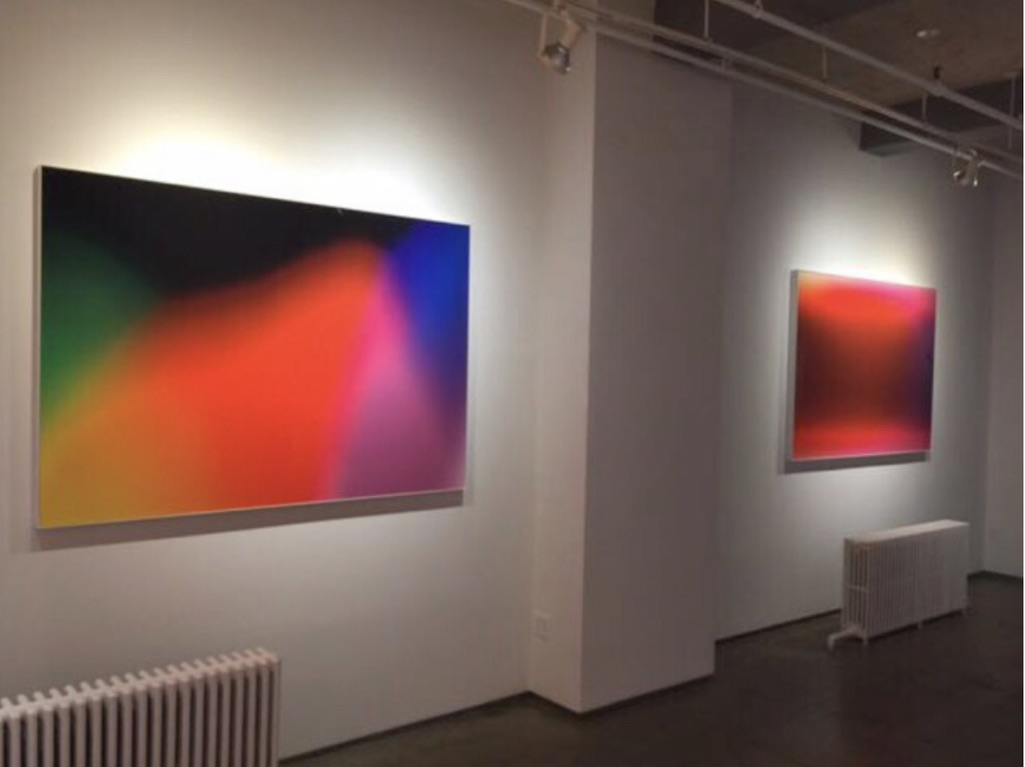
People know Continuum as an immersive animated installation. What they may not know is that it was not conceived as video. Continuum is, at its origin, a series of individual digital paintings — still compositions of colour and light, each one a meditation in itself — that were later curated into sequences and animated interwovenly into the flowing experience the world now recognises. The animation came second. The paintings came first. And the paintings are where the real story lives.
I do not paint with pigment. I paint with the light that screens emit.
Since 2012, Kim's process has been to gather digital images of LED lights — photographing the raw luminosity of the screen itself — and then manipulate these captured light sources using multiple software tools within a painterly framework. She is not illustrating. She is not rendering. She is composing with actual light, treating the pixel as a pigment, the screen as a canvas, and the colour space as a contemplative environment.
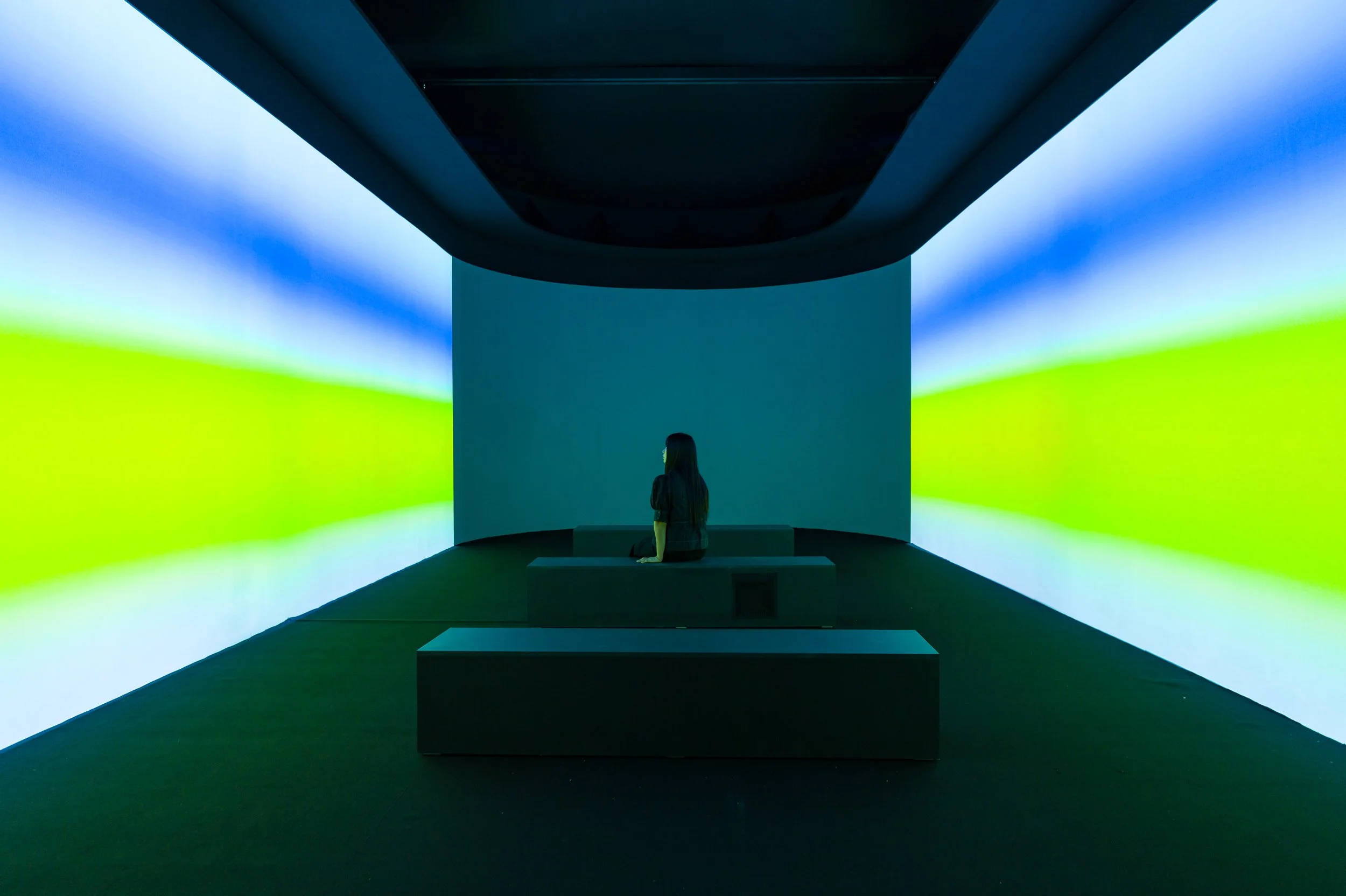
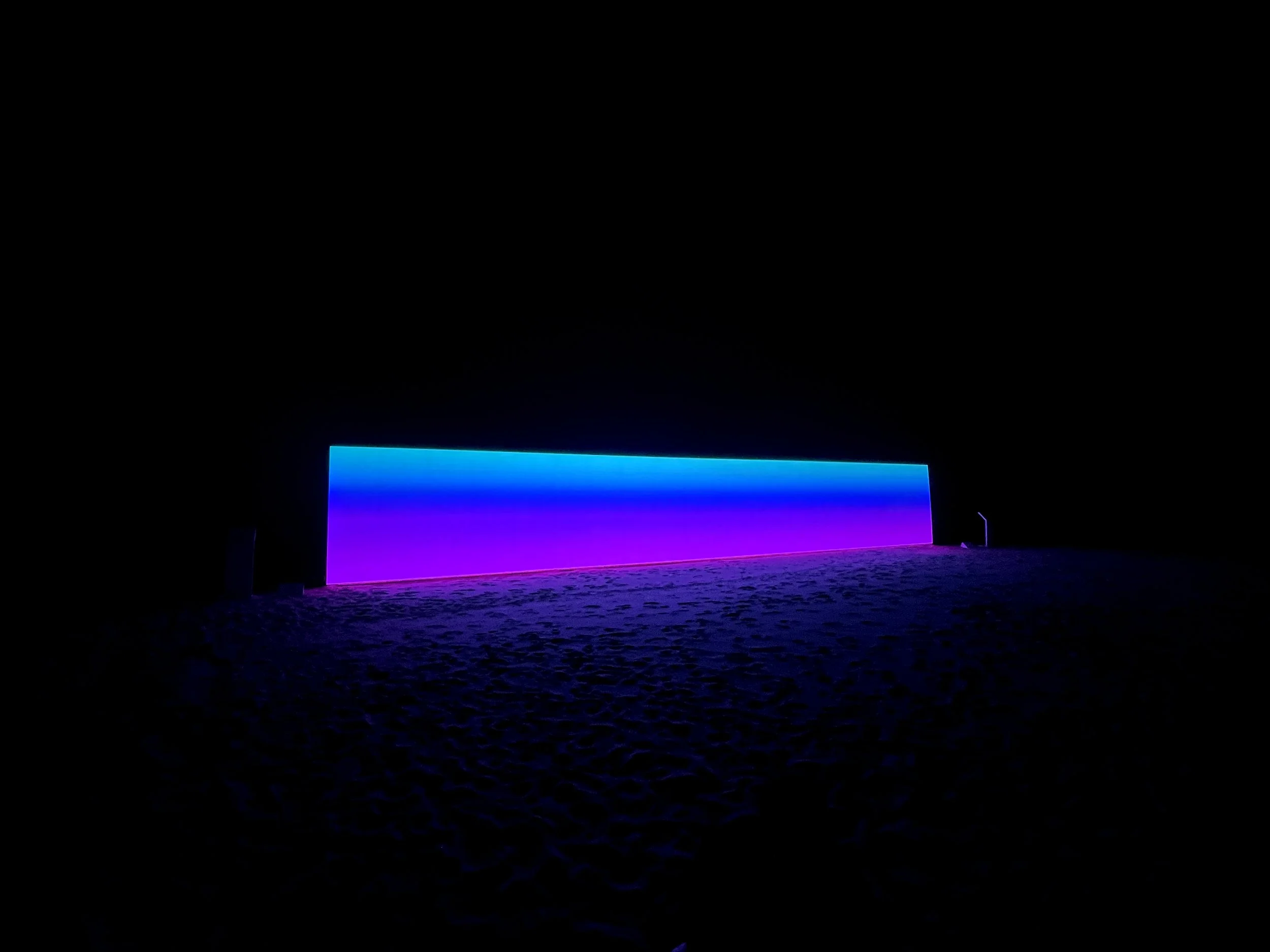
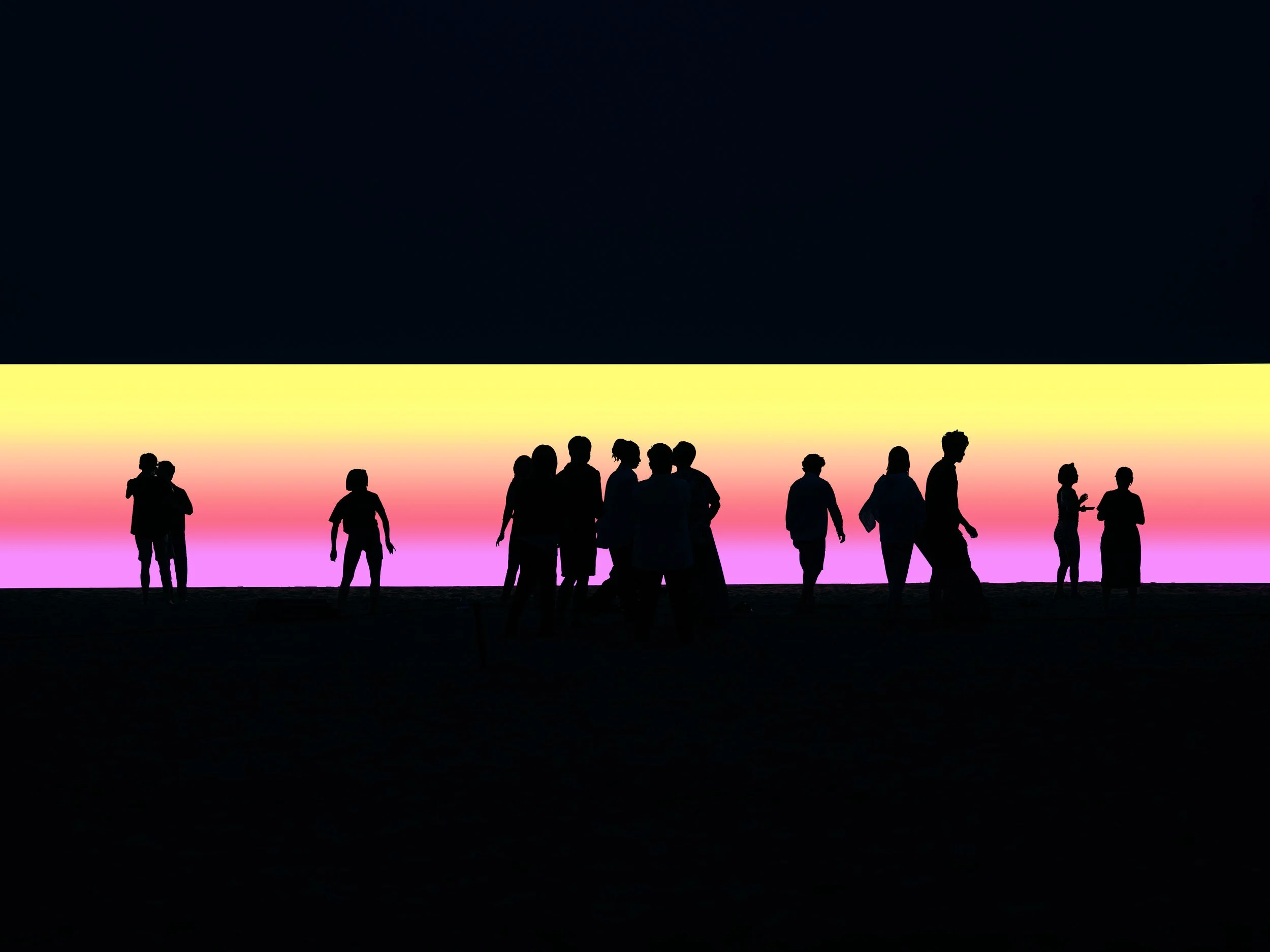
The technique is closer to Colour Field painting — vast, enveloping expanses of colour that have no focal point, no horizon, no object. Just colour in relationship with colour. Soft lavender bleeding into oceanic blue. Warm pink dissolving into pale gold. The greens are so quiet they feel like the memory of forests. White that arrives like dawn.
Each composition emerges from a meditative state. Kim's father — a Grandmaster of Martial Arts — taught her the Korean word Mushim: empty mind. Before composing, she enters Mushim first — emptying the mind, listening not to ideas but to the body, following the felt sense of where a gradient wants to shift, stopping when something inside her settles.
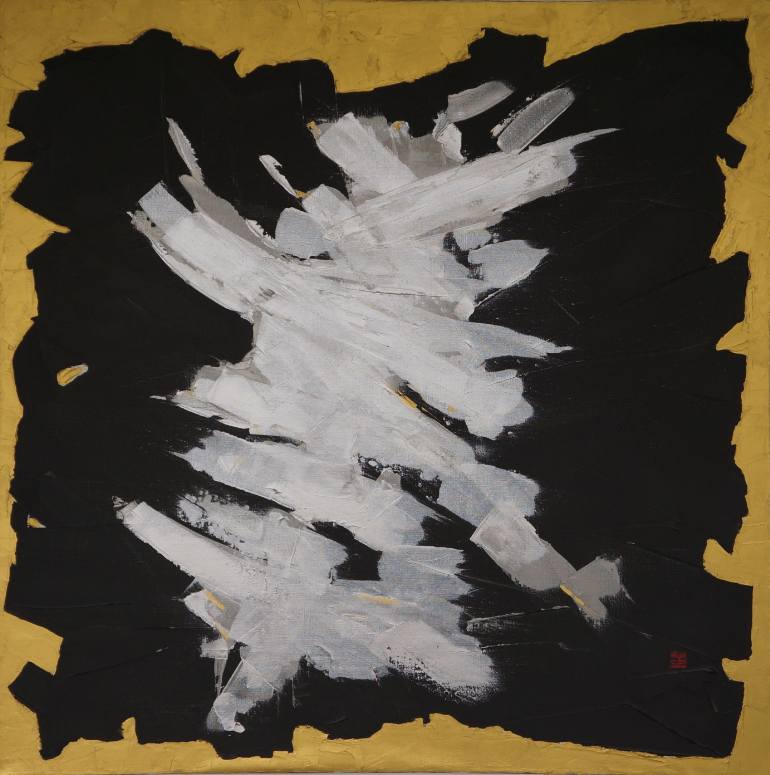
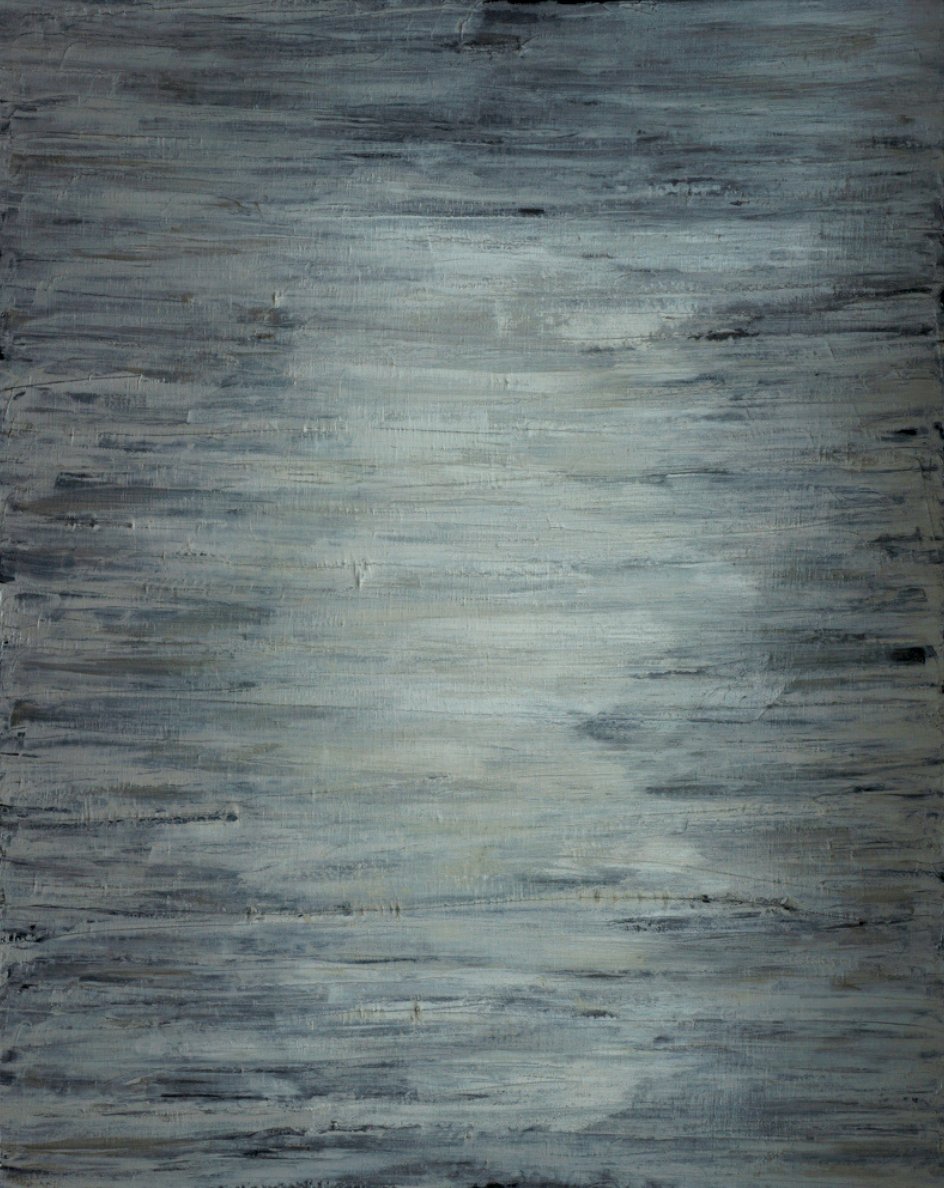
The digital work did not emerge from nowhere. Before the gradient paintings — before the luminous fields of colour that would eventually fill Times Square and the walls of LACMA — there were canvases. Physical, material, worked by hand — paintings that were already reaching toward light, already trying to make pigment glow.
During her years living and studying in Japan, Kim immersed herself in the abstract traditions she found there — the precision of mark-making, the philosophy of the brushstroke as an extension of the body's energy, the Zen understanding that technique and stillness are not opposites but the same discipline approached from different directions.
The paintings from this period are built with metallic and iridescent pigments — silver, gold, copper, pearl. The choice of material was intentional: metallic paint does not absorb light the way conventional pigment does. It refracts it. A painting made with silver pigment is never the same painting twice — it changes with the hour, with the season, with the position of the viewer's body.
The digital paintings are the answer to the question the metallic paintings asked. When she moved to the screen, she did not leave the iridescence behind — she found a medium that never stops refracting.
Kim's artistic life changed in one afternoon at the Ryoanji Temple Garden in Kyoto. Seated in that garden — raked white gravel, fifteen moss-covered stones, a 500-year-old composition of radical simplicity — something opened. She understood that the Zen monks had created an immersive experience in service to humanity: a space that elevates consciousness. Not through spectacle but through reduction.
She saw the mirror between that practice and her father's teaching. The martial arts exist to elevate human consciousness. The Zen garden exists to elevate human consciousness. Sitting there, she knew she wanted to carry this tradition forward — not through gravel and stone, but through the medium of our time: the digital screen.
The great modern ink painter — the painting and the meditation are the same act.
Colour field paintings proved that pure colour, at scale, could overwhelm the thinking mind.
Light itself — not a picture made with light, but light as material — is the medium of consciousness.
Krista Kim composed her colour fields by feeling — by the body's response, by the nervous system's reach toward certain wavelengths. She did not begin with neuroscience. She began with Mushim. What clinical research is now revealing is that her intuition was precise.
The autonomic nervous system maintains balance through its response to environmental light. High-illuminance blue light reduces heart rate variability, promoting arousal; lower-illuminance warm light increases it, supporting parasympathetic relaxation. Kim's soft lavenders, warm pinks and luminous golds sit precisely within the therapeutic window.
The human visual system is optimised to process fractal patterns. A fractal dimension of ~1.3–1.5 is the zone of maximal aesthetic appeal and physiological relaxation. Kim's slow gradients align with this resonance cluster — inducing measurable increases in frontal alpha-wave activity, the signature of wakeful rest. The eye is not searching. It is settling.
The retina is highly sensitive to green wavelengths near 530nm. Green Light Therapy shows efficacy in alleviating chronic pain by modulating the endogenous opioid system. The greens in Kim's palette are not compositional choices alone — they are biological events.
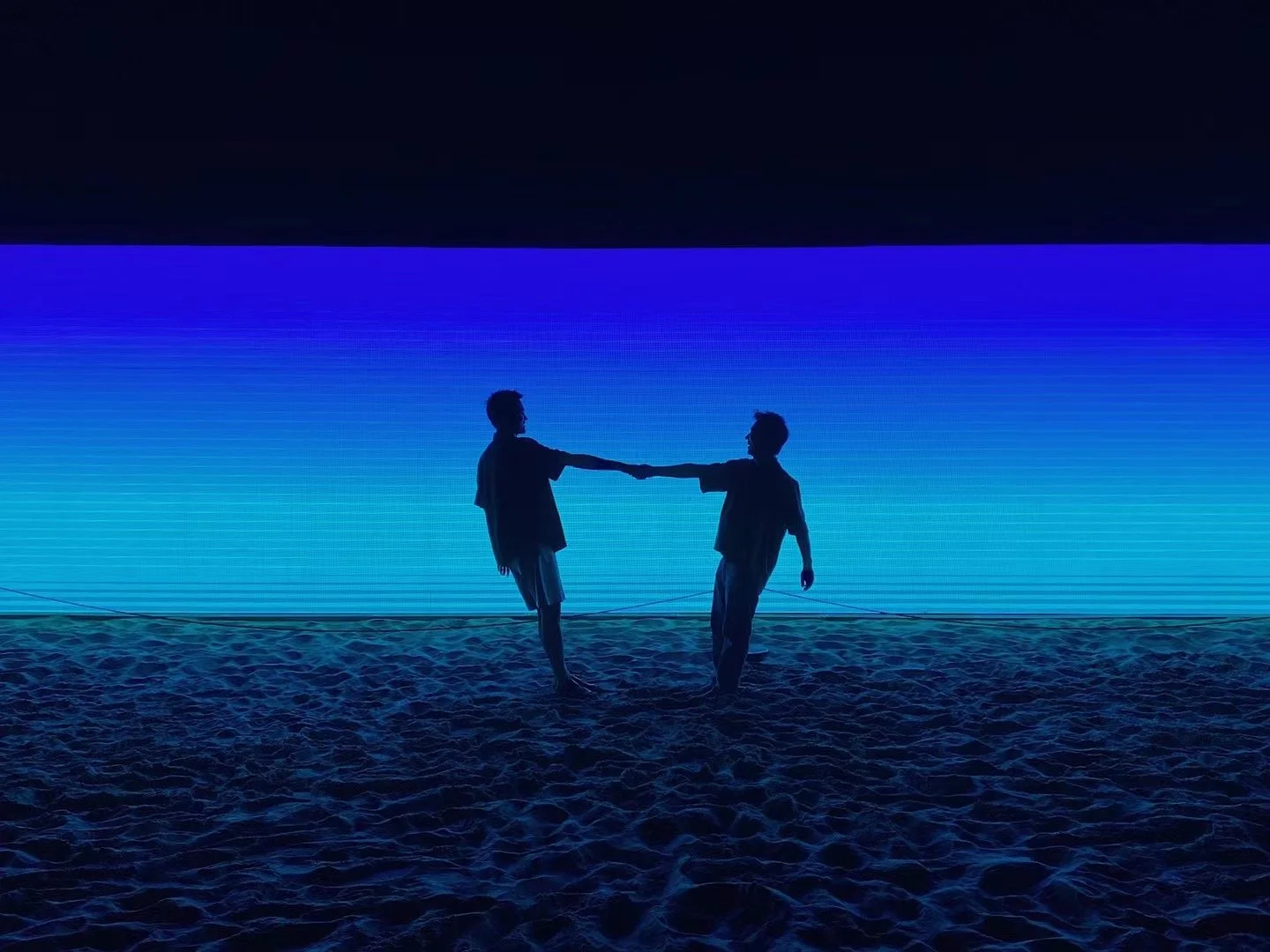
When a colour field occupies peripheral vision entirely, it creates the Ganzfeld effect: the thalamus reduces its filtering activity, and the nervous system moves toward deep rest. Kim's installations do not merely surround the viewer. They biologically integrate.
The journey from painting to animation was not a leap. It was an unfolding. Kim had built a body of individual works — hundreds of digital paintings, each a complete Zen colourspace. She began to see them not as isolated compositions but as movements in a larger meditation.
She curated the paintings into sequential series — choosing the order by how the transitions felt in her body. She then animated the sequences interwovenly — one painting dissolving into the next in slow, continuous transitions, so that no single frame is ever fully one painting or another. The viewer is always between. Always in the gradient. Always in the space of becoming.
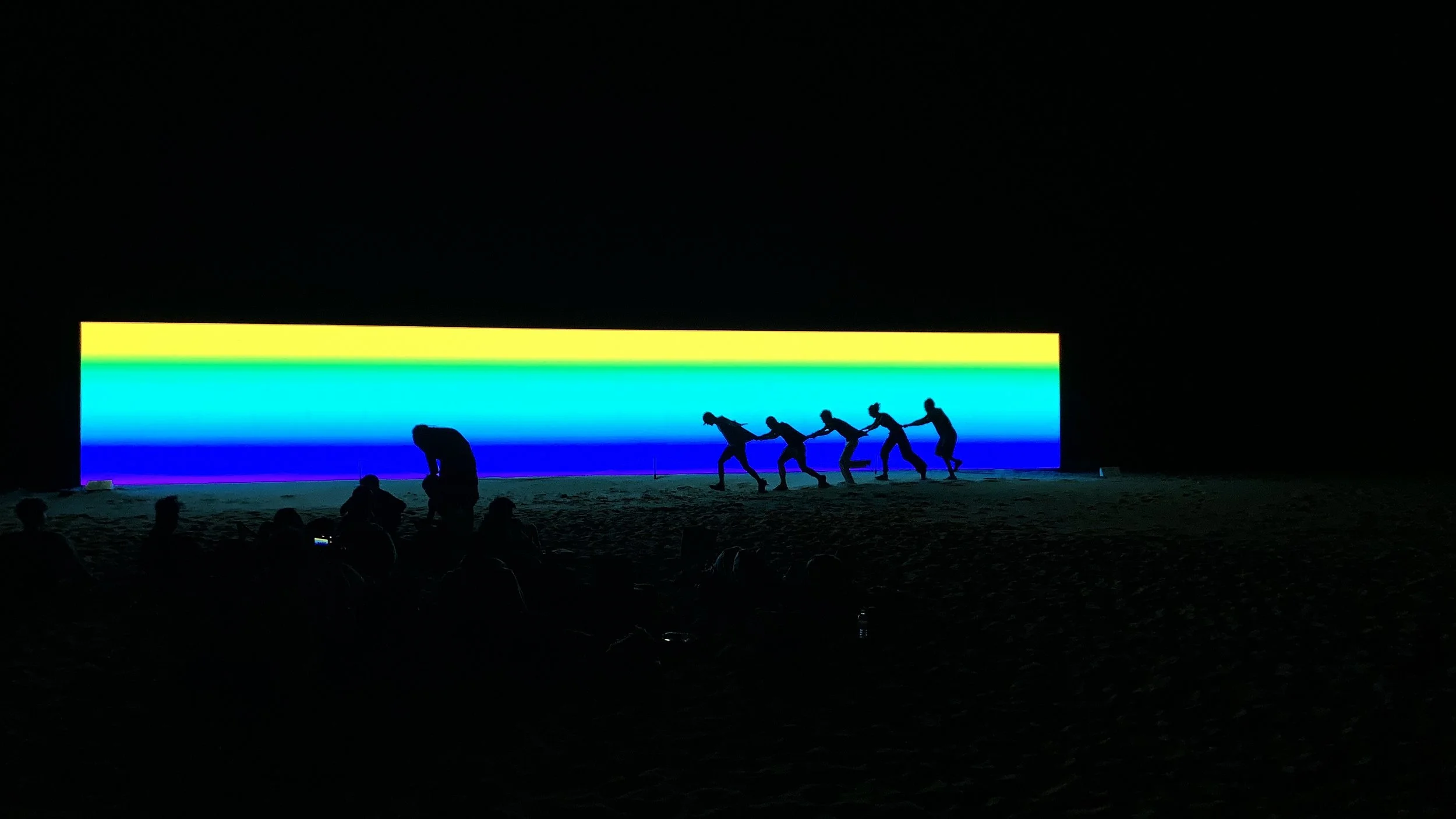
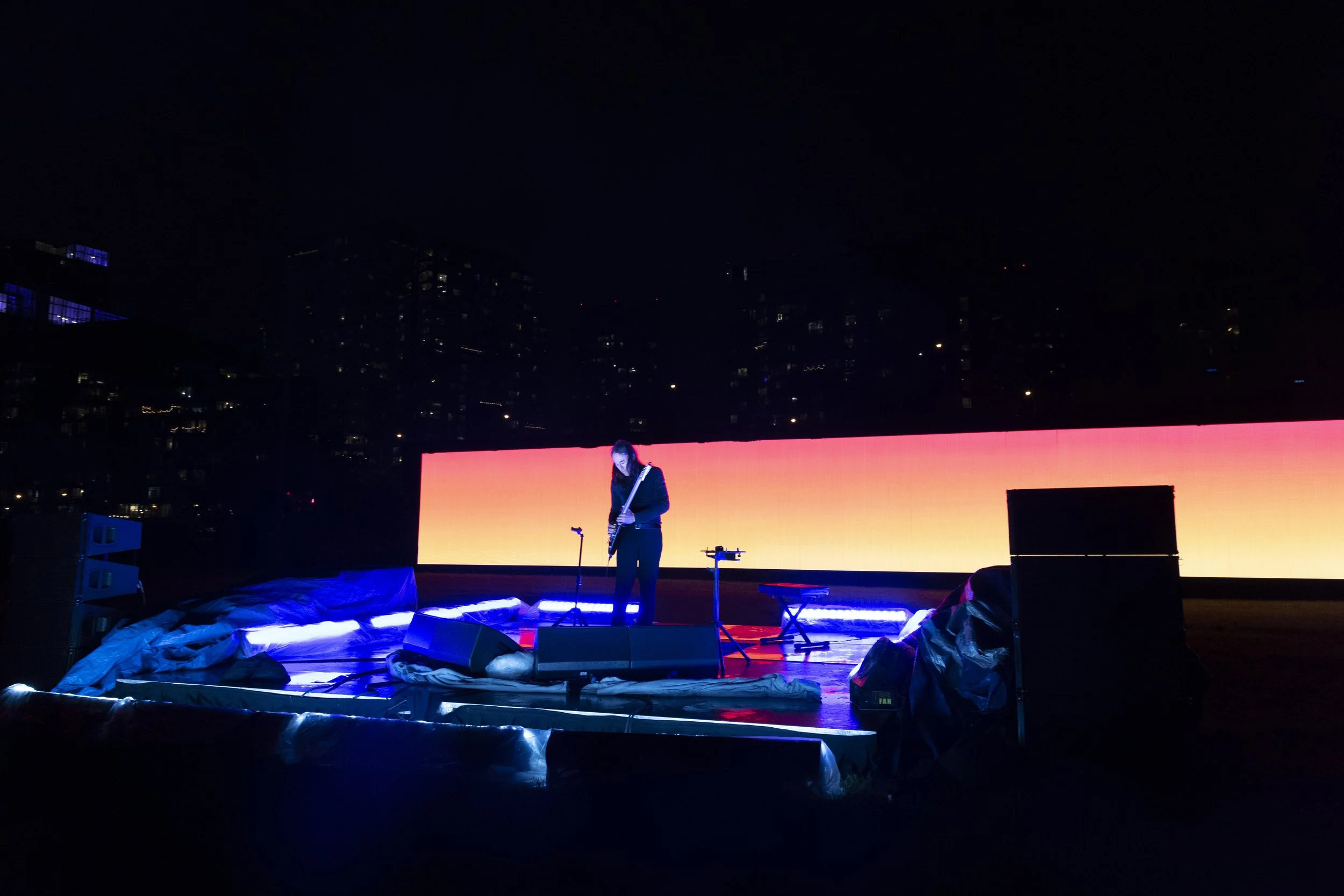
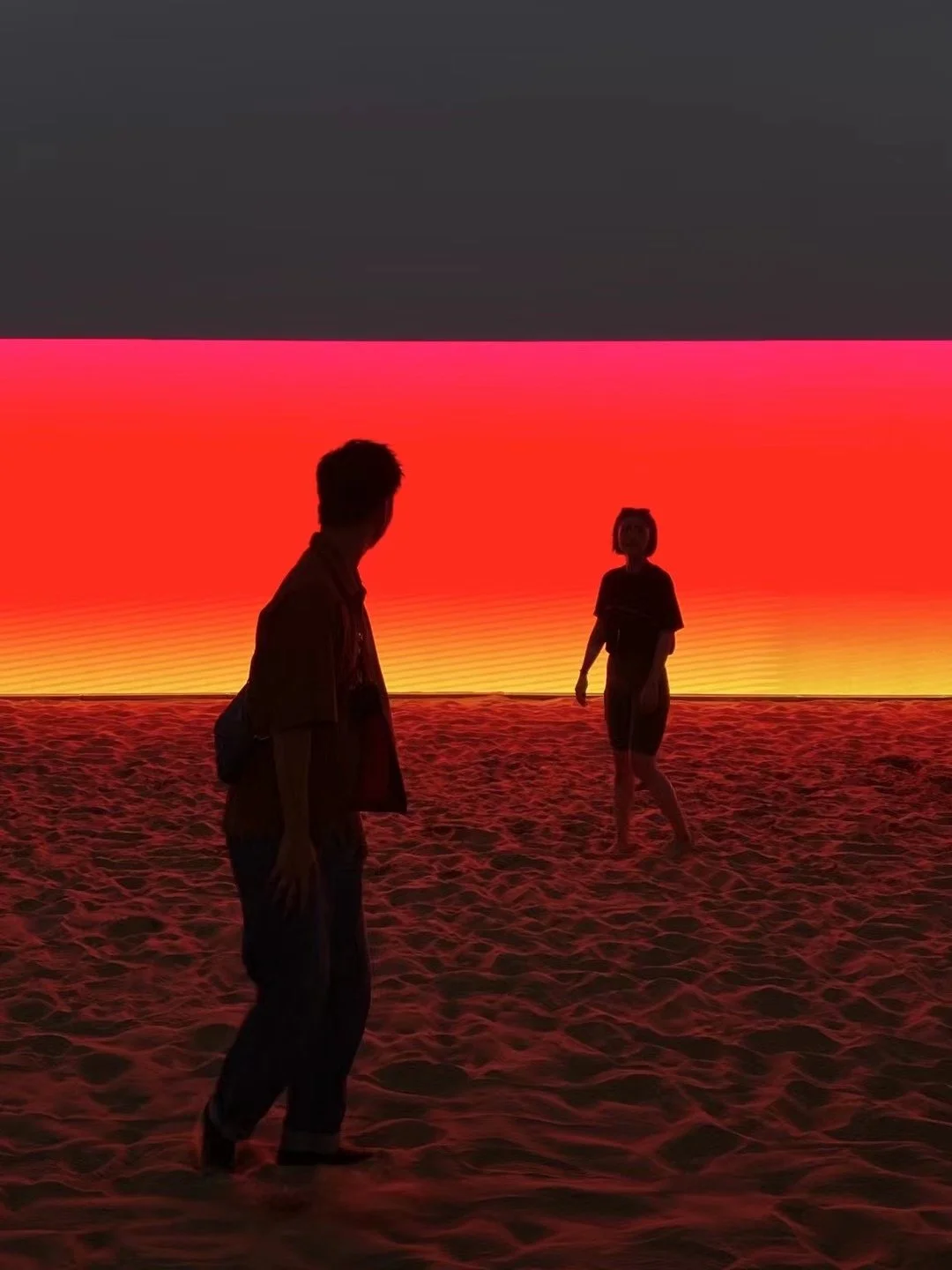
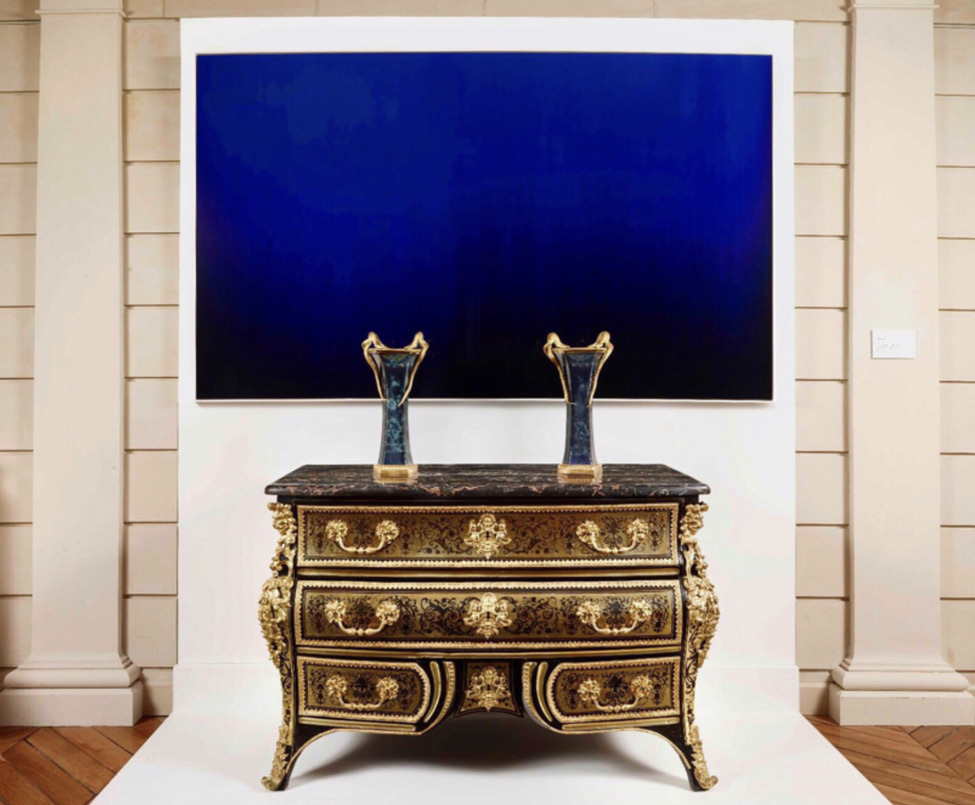
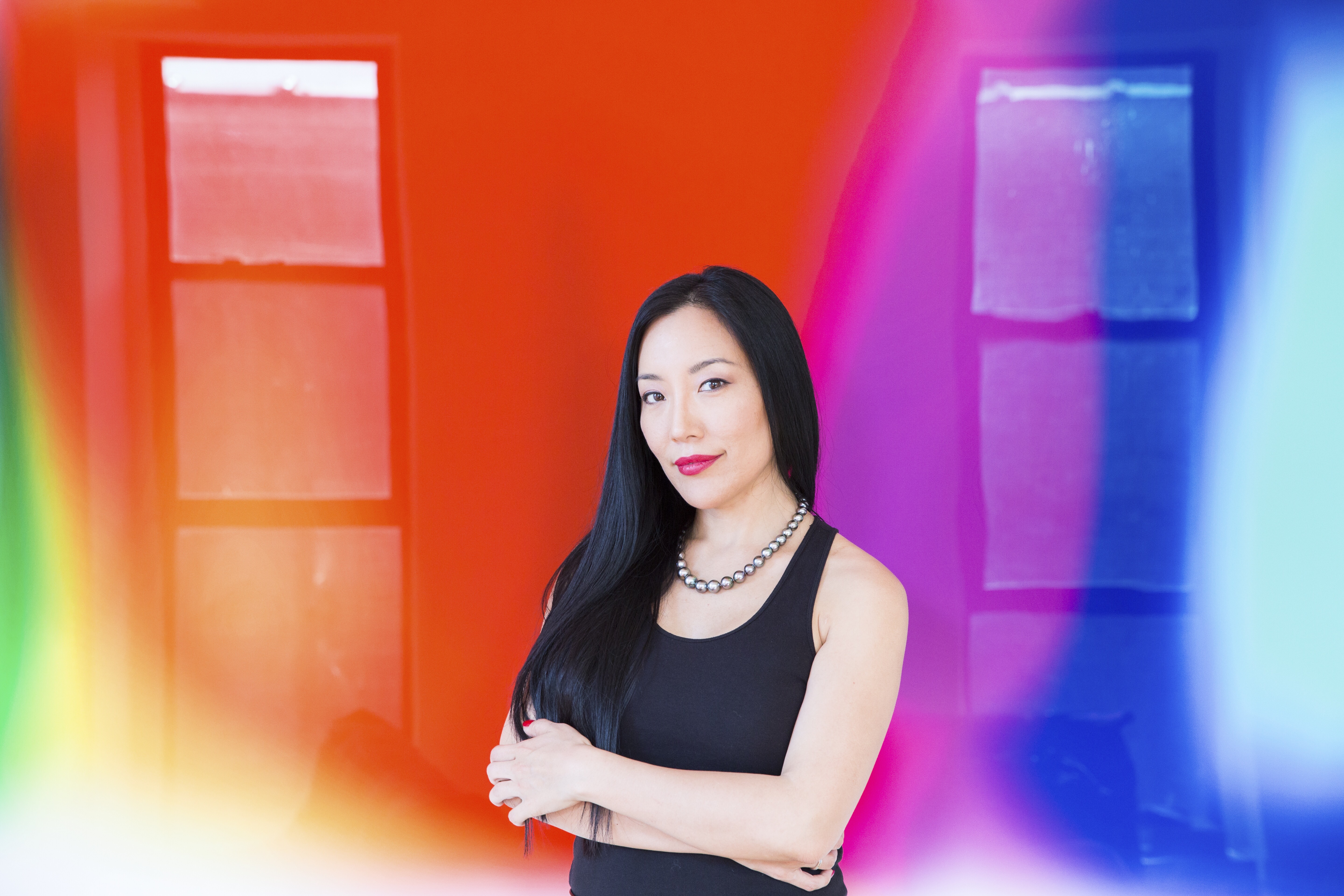
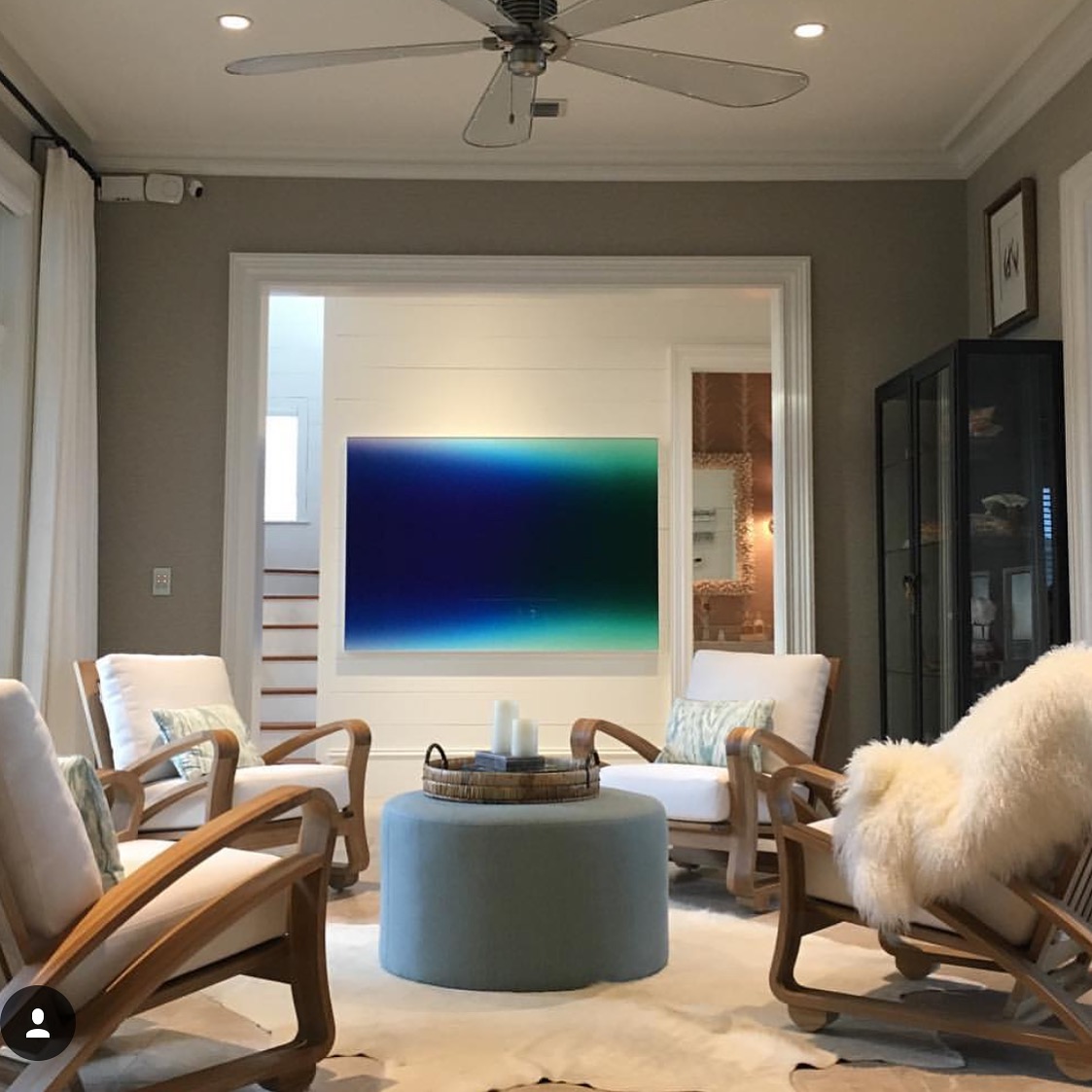
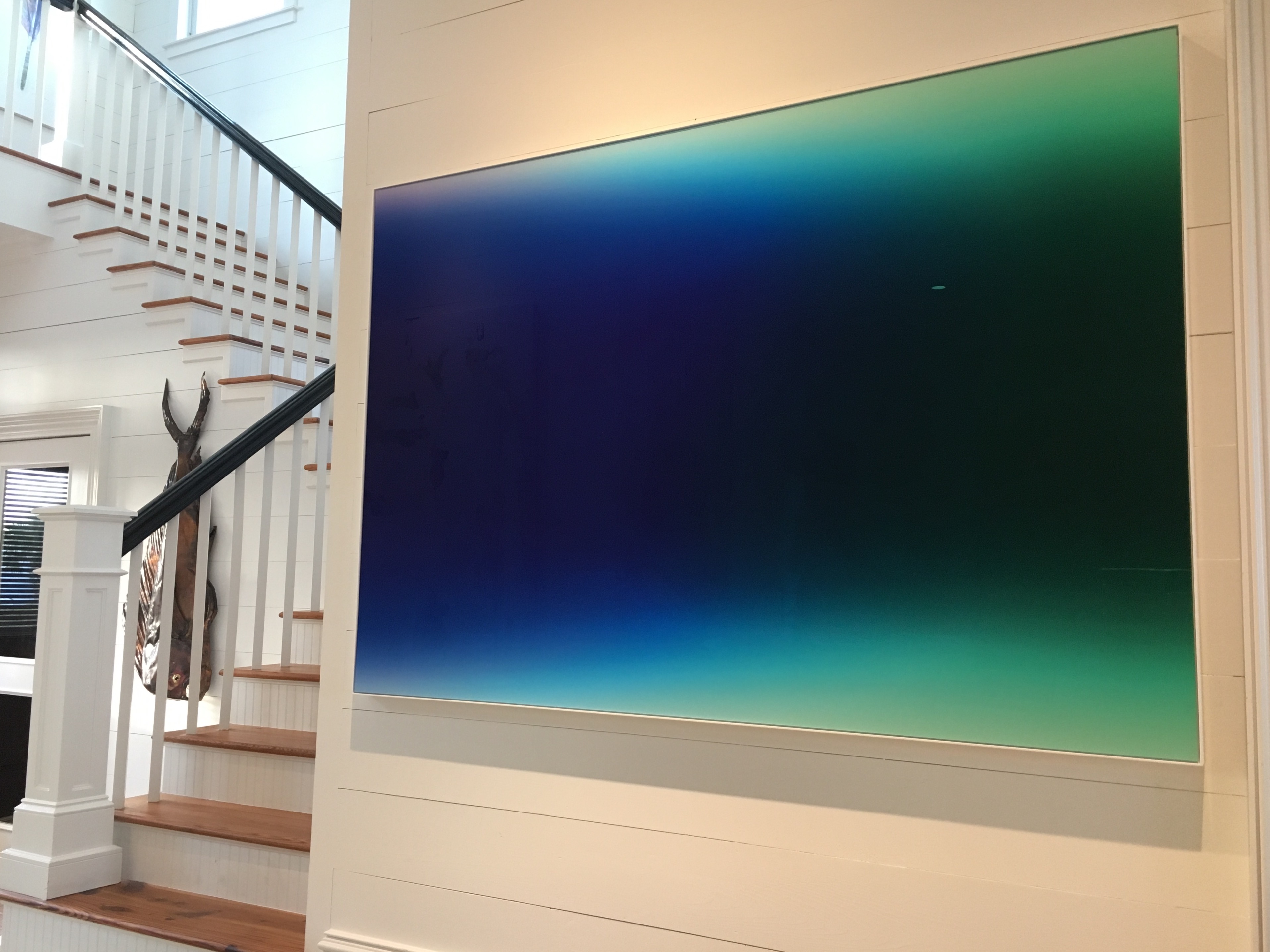
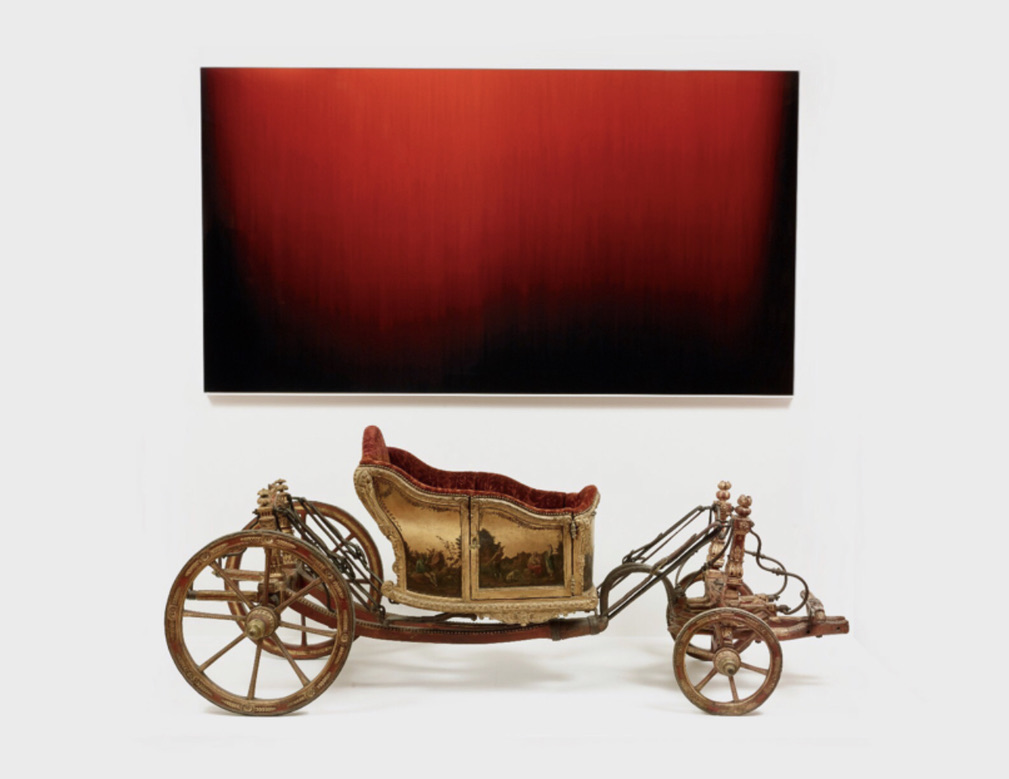
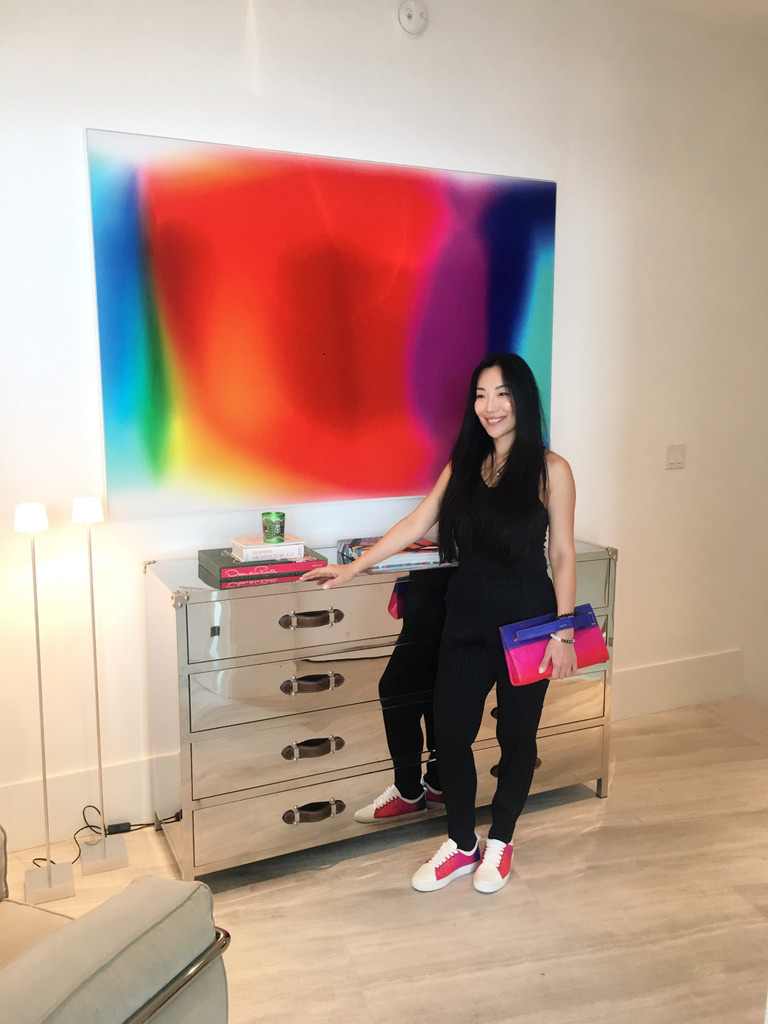
Krista Kim is a Canadian-Korean contemporary artist. She is currently writing Proof of Humanity, a book on human sovereignty in the age of AI.
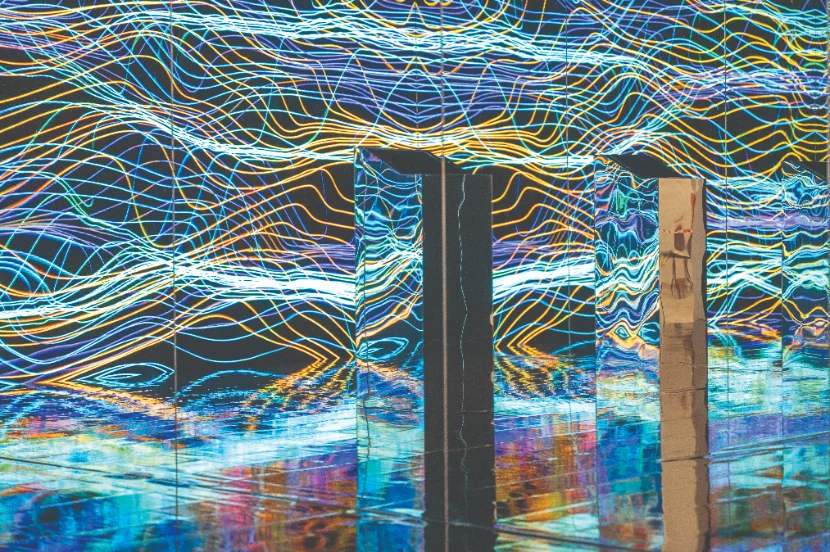
A collaborative biometric, AI-generative immersive environment that renders the invisible architecture of human connection visible.
HEARTSPACE premiered at Art Dubai 2024 — commissioned by Julius Baer — as the first collaborative biometric, AI-generative immersive environment: a radical proposition in participatory art that renders the invisible architecture of human connection visible. Since its debut, the work has travelled to MOCO Museum London and Barcelona, manifested in a collaboration with Tiffany & Co.'s “With Love, Seoul” at Lotte World Tower, and appeared at the World Economic Forum's Annual Meeting of the New Champions in Dalian.
Within an infinity-mirrored chamber, a luminous LED plane becomes the site of emergence. Four participants simultaneously interface with ECG sensors — an act of corporeal intimacy that bridges flesh and algorithm. A proprietary AI generates a cryptographic key pair through zero-knowledge proof: no biometric data is stored or extracted.
HEARTSPACE does not track. It does not extract. It does not steer. It listens. Your heartbeat, your breath, your living rhythms become the raw material — and the system responds, harmonising with you in real time. You are not a data point. You are the source.
We are entering a new era where AI transforms data into deeper human understanding — keeping our humanity intact. This is the art of AI humanism.
Within the installation, four distinct waveforms converge into a breathing portrait of collective presence. Each Heart Signature — derived from a zero-knowledge cryptographic key pair — manifests as a unique chromatic and kinetic identity. The underlying biometric remains cryptographically sealed: identity verified, never violated.
Unlike fingerprints, which can be lifted from surfaces, or facial recognition, which can be fooled by photographs and deepfakes, your heart's electrical signal is internal, dynamic, and impossible to replicate. It is, quite literally, your life force made digital.
World's leading platform for art from the Global South. Commissioned by Julius Baer. World premiere.
A vibrant space showcasing modern and contemporary art. Nov 2025 – Apr 2026.
Contemporary art museum in the heart of Barcelona.
World Economic Forum's Annual Meeting of the New Champions.
The world's largest annual light art festival.
“With Love, Seoul” — a collaboration at Lotte World Tower celebrating love and artistry.
One of Canada's most distinguished public art institutions. October 2027.
HEARTSPACE is not only an artwork. It is a demonstration — a living, participatory proof of what technology can look like when it is designed from entirely different principles. Every system you interact with in your digital life today extracts something from you. HEARTSPACE refuses that logic entirely.
A proof of humanity that originates from within, and cannot be taken from you.
A somatically engaged encounter at the convergence of zero-knowledge cryptography and aesthetic practice. Participants interface with AI-driven sensors, which generate a cryptographic key pair from their cardiac rhythm — no biometric data is stored or transmitted.
Each Heart Signature finds visual form through generative waveforms and chromatic fields that index emotional states — yet the underlying biometric remains cryptographically sealed. Identity verified, never violated.
Visitors engage directly with biometric sensors, offering their heartbeats as the basis for cryptographic key generation — not data capture. The act of participation becomes the act of authentication.
Real-time algorithmic translation of zero-knowledge key pairs into evolving digital compositions of waveform and colour. Each Heart Signature is unique, ephemeral, and unrepeatable.
The architecture of communication between self-sovereign agentic AI systems, each answerable to the individual it represents — using data to amplify our depth, and to help us become more fully human.
A multisensory chamber synthesising sound, light and image into a unified experience. The infinity-mirrored space dissolves the boundary between self and collective.
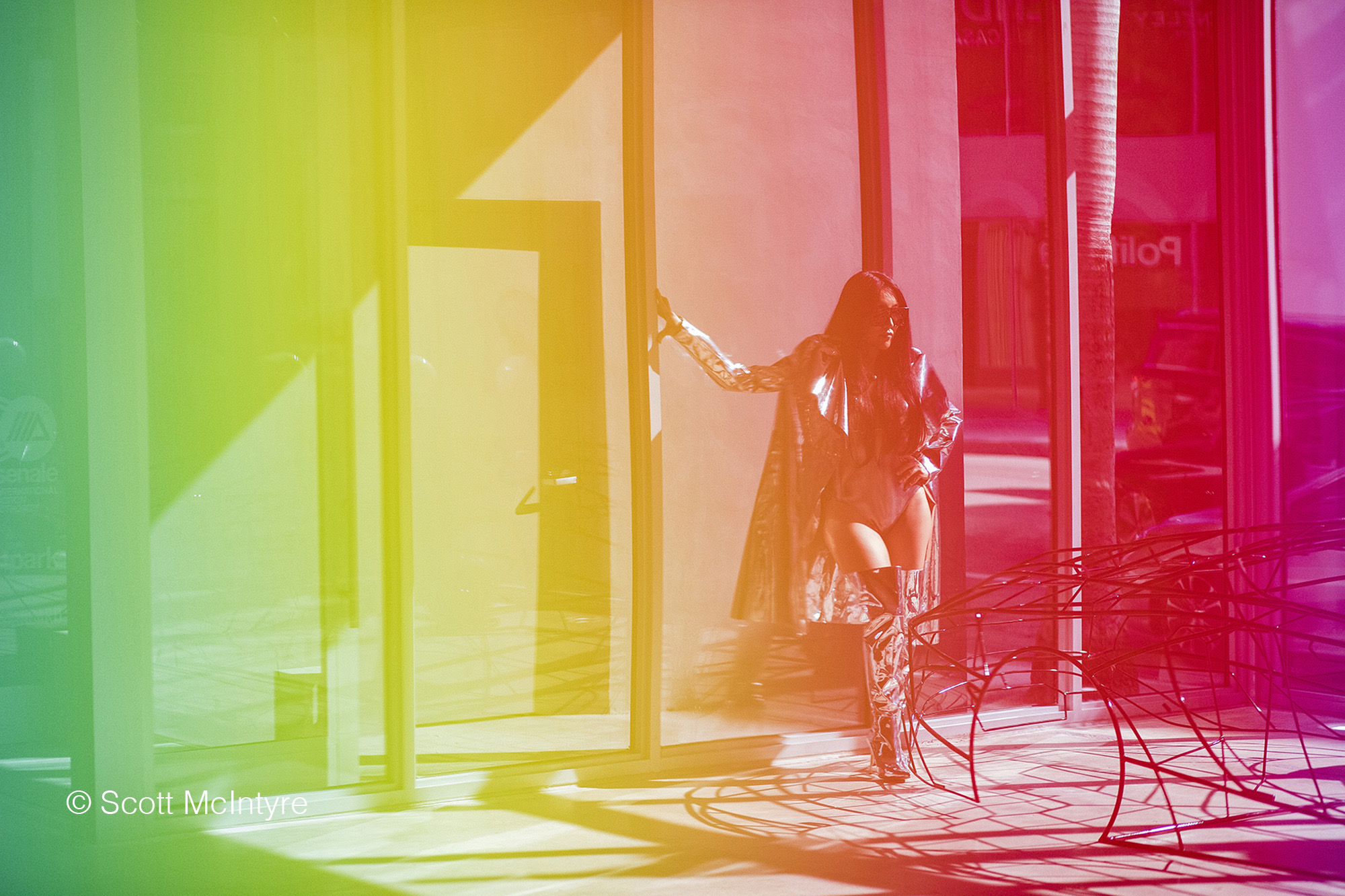
Krista Kim is a pioneering figure in ultra-contemporary art, whose practice excavates the emergent territories of digital consciousness. Kim serves as a Cultural Leader of the World Economic Forum and Metaverse Editor of Vogue Singapore.
In 2020, Kim conceived Mars House — the first NFT digital home sold on the open market and the highest-grossing sale on SuperRare in March 2021, now in the permanent collection of LACMA. In 2014, she initiated the Techism Movement, a framework recognising technological innovation as an artistic discipline.
Her landmark work HEARTSPACE (2024), commissioned by Julius Baer, premiered at Art Dubai and is currently on tour globally — translating each participant's electrocardiographic rhythm into a real-time generative environment.